Emergency Training Equipment Canada: Budget vs. Premium Options
If you teach lifesaving skills in Canada, your equipment takes a daily beating. Car trunks in minus 20, hastily packed gear moving between rural halls and downtown boardrooms, bleach wipes, hundreds of compressions an hour, and a pandemic’s worth of attention on sanitation. Picking between budget and premium options is not just a line on a PO. It affects learner outcomes, class flow, and your long term operating costs.
The Canadian market has matured. Affordable CPR and first aid training kits now deliver features that used to sit behind a premium price tag, and premium models have doubled down on durability and detailed feedback. The trick is matching the right tool to your mix of course volume, instructor style, and organizational expectations.
Below is a practical, experience-backed guide to choosing among CPR training manikins Canada offers, AED training equipment Canada uses across diverse curricula, and how CPR instructor packages Canada wide can be configured without overbuying. I will also thread in the gritty details that matter here: bilingual labelling, climate swings, consumables, course standards, and service access north of the border.
What “budget” and “premium” really mean in this market
Price is the obvious divider, but the more useful distinctions are build quality, feedback fidelity, and the total cost over five years. Budget gear tends to have lighter plastics, simpler feedback, and cheaper consumables. Premium gear adds rugged shells, precise metrics, wireless connectivity, and long warranties. The hidden variable is uptime. If a class stalls because a Bluetooth connection drops or a compressor spring snaps, the true cost shows up in refunds and schedule reshuffles, not just parts.
In Canada, service availability and spare parts logistics also matter. Some brands stock parts in Ontario or Quebec through distributors, others ship from the U.S. Or Europe. A one week wait is manageable, a three week delay can torpedo a busy month of courses. When comparing quotes, ask where parts ship from and typical turnaround time.
CPR manikins: realistic feel versus classroom efficiency
Most Canadian instructors live somewhere along two axes: realism and throughput. On the realism side you want accurate chest recoil, airway resistance, and chest wall stiffness that matches an adult torso. On the throughput side you want fast setup, easy cleaning, and feedback that keeps 12 people on pace without constant correction.
Prestan and Ambu dominate the budget to midrange, along with some private-label imports that pop up under distributor brands. Premium in our market usually means Laerdal and Brayden’s illuminated-chest models. Here is how they diverge in real life.
Build and durability. Prestan’s adult manikins are the workhorses of many community programs because the torsos handle compressions by hundreds of learners before springs fatigue. They carry a simple clicker for depth indication. Over three to five years, you can expect to swap out the chest spring assembly at least once per torso if you run weekly classes. The plastics get scuffed but hold up. Brayden and Laerdal use thicker shells and denser foam in their premium lines. Resusci Anne QCPR torsos in my kit have taken roughly 30,000 compressions without drift in depth feedback, and the ribcage still rebounds like week one. The premium shells also handle winter vehicle storage better, less risk of microcracking when you teach in unheated spaces.
Feedback options. Budget models usually provide a depth clicker and sometimes a single LED for rate. Students either hit the click or they do not, which makes basic correction simple. Premium QCPR systems show rate, depth, recoil, and hands-off time per learner on a tablet, sometimes with multi-student dashboards. In classes with motivated adult learners, the dashboard trims five to ten minutes from practicals because self-correction happens in real time. In large corporate sessions, one instructor can keep four stations honest without hovering.
Airway and AED practice. Not all manikins love defib pads. Pebbled chest textures and powdery plastics can peel pads off in humid rooms. Laerdal’s smoother skins tend to keep pads on longer, but even budget models behave well if you wipe with isopropyl first and rotate pad sets. If you need head tilt and jaw thrust practice, look for articulated heads. Many budget torsos have fixed necks. Ambu’s airway kits bridge this gap at midrange pricing with swappable airways and decent head tilt.
Sanitation and consumables. Disposable lungs and face shields add real recurring cost. Expect $0.30 to $0.80 per learner for lungs when you count waste, and $0.10 to $0.40 for barrier devices, depending on volume. During respiratory illness surges, some agencies mandate one lung per student and no shared facials, which can quadruple your consumable burn. Premium systems with easy-to-swap lungs save instructor fingers and time between stations. If you teach in Quebec or federal contexts, check that packaging and instructions are bilingual. Several U.S. Imports ship English-only consumables unless you request Canadian packaging.
Cold weather quirks. Stored in an unheated van in January, many budget torsos stiffen. The first round of compressions can feel like concrete, which confuses learners. I carry foam heat packs and set manikins in a warm room for 20 minutes before class. Premium torsos with denser foam recover faster, but I still avoid starting a class below 10°C equipment temperature.
Price ranges in CAD. For a reliable adult budget torso with clicker, plan on $180 to $350 per unit. Midrange with basic lights runs $350 to $600. Premium QCPR torsos with Bluetooth and app support sit between $900 and $1,600 each depending on the package. Student packs that include four to six torsos and a bag improve per-unit pricing by 10 to 20 percent.
AED training equipment: matching what learners see at work
AED trainers in Canada fall into two clusters. Generic trainers that mimic common prompts and pad placement, and brand-specific trainers that mirror devices deployed in Canadian workplaces like ZOLL AED Plus, HeartSine Samaritan, or Philips HeartStart. Many safety managers prefer learners to practice on the same interface they will find in the hallway cabinet. When the site’s AED fleet is known, brand-specific trainers pay off. When you deliver open enrollment community courses, generic multi-language trainers keep costs down.
Power and pads. The Prestan AED UltraTrainer, a favourite among instructors watching budget, runs on AA batteries and gives programmable scenarios in English and French. Replacement pads are affordable and stick well across most manikins. Premium brand trainers like ZOLL Trainer 2 or HeartSine trainers cost more up front and per pad set, but they copy voice prompts and graphics exactly, which reduces hesitation in real incidents. Factor in pad stock. Some trainers use proprietary connectors that only one distributor carries in Canada.
Software and protocols. Not all trainers are updated when resuscitation guidelines change. Some generic units lag a cycle, which is fine if your curriculum references performance goals rather than scripted prompts. Premium trainers from the major AED manufacturers usually receive updated prompts within months of guideline changes. If you teach corporate clients with internal auditors, this can matter during compliance checks.
Durability. Over hundreds of starts, cheap membrane buttons on entry-level units can fail. Look for replacement button pads in distributor catalogs, or plan on a 10 to 15 percent attrition rate over five years. Premium housings and button arrays handle more abuse, but even those will need occasional re-soldering if they travel constantly.
Bilingual and CSA context. AED trainers are not therapeutic devices, so CSA certification workflow does not apply as it does to live AEDs. Still, public agencies and Quebec clients often expect bilingual prompts and labels. Several budget trainers offer a language toggle. Confirm that written quick-start cards and pad diagrams arrive bilingual as well. It saves you from taping translations into every kit.
Price ranges in CAD. Generic trainers land in the $150 to $300 band. Brand-specific units typically cost $450 to $900. Replacement training pads run $15 to $50 per pair, with cheaper pads good for 30 to 50 adherences if stored flat and cleaned with alcohol between uses.
CPR instructor packages: bundles that make sense, and those that do not
Distributors in Canada assemble CPR instructor packages to simplify startup. The best of these bundles cluster around common class sizes and include extras like carry bags that double as kneeling mats, spare lungs, a couple of infant torsos, and one or two AED trainers with extra pads. I avoid bundles that pad the invoice with trinkets you will not use, like high-end stethoscopes for non-clinical courses or duplicate timers when every smartphone does the job.
An effective starter pack for community classes typically includes four adult manikins, two infant manikins, one AED trainer with two sets of pads, a pump and spare lungs, a surface disinfectant that meets your agency’s requirements, and enough barrier devices for several classes. When you scale to corporate contracts with 16 to 24 learners, jump to eight adult torsos and two AED trainers to keep downtime low. CPR and first aid training kits vary widely. If you add bleeding control or oxygen therapy modules, audit your kit content against the standard you teach, whether Canadian Red Cross, Heart and Stroke Foundation, or St. John Ambulance. Overbuying is common in the first year. You can always add specialty items once you are landing those advanced bookings.
The numbers that drive total cost of ownership
It helps to look past sticker price. For CPR training manikins Canada wide, the rough math over five years often looks like this for a typical community instructor running two classes a week, 10 learners per class.
A budget torso at $280, plus springs at year three, $40, and lungs at $0.50 per learner per class, ends up near $1,100 to $1,400 all-in when you attribute the torso to a quarter of your students in each session. A premium QCPR torso at $1,200, with a $60 battery pack replacement at year three and similar lung costs, ends near $1,700 to $2,100. What do you get for the extra $600 to $800? Lower instructor fatigue, faster skill acquisition due to richer feedback, and a more polished brand perception if you are selling to corporate clients. If your clients buy primarily on price and certification alone, budget wins. If they buy on experience and outcomes, premium often repays itself in repeat bookings and word of mouth.
AED trainers follow a similar arc. A $220 unit with $20 pads replaced twice a year runs $320 to $360 over two years, barring failures. A $700 brand-specific unit with $40 pads replaced twice a year runs $860 to $940. But if your client operates 60 ZOLL AED Plus devices across campuses and hires you specifically to align drills with that interface, the premium unit’s fidelity often seals the contract.
Cleaning, infection control, and what actually saves time
During busy months, the bottleneck is rarely instruction time. It is tear-down and reset. I time students on compressions, but I time myself on cleaning. Small choices add up.
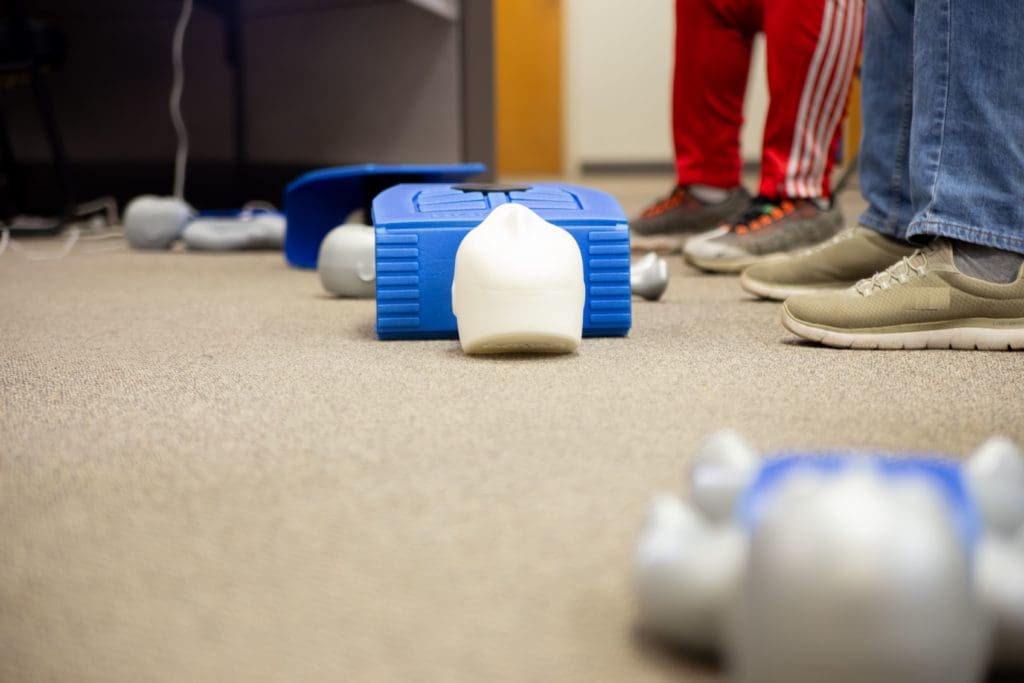
Manikin skins respond best to quats or accelerated hydrogen peroxide wipes approved by your agency. Alcohol wipes work, but over months they dry plastics and shorten skin life. Budget skins may cloud or craze if you scrub hard while cold. I let units warm to room temperature before disinfecting to prevent microfractures. On travel-heavy days, I batch-clean in the evening rather than at each site, and use single-use airways within a group so that lungs swap without tools. Premium torsos with snap-in lungs cut swap time to seconds. Budget units that require threading or adhesive flaps slow you down when tired.
AED trainer pads last dramatically longer if you wipe the chest area with isopropyl first and store pads on a silicone liner rather than the pad backing alone. I mark pad sets with a Sharpie count, replacing them when adhesion drops below safe levels. It sounds fussy, but it cuts pad spend by a third.
Regional considerations across Canada
Teaching in Canada means weather, distance, and language. In Vancouver, salty air is kind to plastics but brutal on metal clips. In Calgary, static dry air increases foam squeak and can trick sound-based clickers. In Northern Ontario and the Prairies, subzero van storage is your enemy. In Quebec, bilingual everything is table stakes and often contractually required.
Shipping matters too. Most distributors ship from the GTA or Montreal. West Coast instructors should factor in a week for bulky manikins unless paying for air. Warranty service can require shipping torsos back to Ontario. Keep one spare torso and one spare AED trainer in your kit, even if it feels excessive. I learned this the hard way when a class in Saint John ground to a halt after a late-night drop broke an AED trainer’s power switch and the backup was in another instructor’s trunk.
When budget gear is a smarter call
There are moments when spending less is the responsible choice. Short pilot programs rarely justify premium outlay. If your current client base is price sensitive and primarily cares about certification, a clean, simple setup with budget torsos and one or two reliable generic AED trainers will deliver. Smaller community groups often find app-based dashboards distracting, preferring instructor-led correction. When you teach in spaces that risk damage to gear, like outdoor sessions or events with unknown foot traffic, anything you put on the floor is at risk. I carry a second set of battered budget torsos for those bookings.
If you rotate volunteer instructors with varying comfort levels with tech, a basic setup prevents support calls at 7 a.m. On a Saturday when Bluetooth will not pair.
Where premium pays off
With corporate training where you have 16 or more learners, limited time windows, and an expectation of measurable outcomes, premium systems shine. Dashboards that show compression fraction and recoil errors back up your coaching with numbers. You can hand the client a simple report with group averages, reinforcing the value of refresher cycles. In healthcare-adjacent courses, learners are often more critical of realism. The chest feel on high-end torsos, especially during recoil, is closer to the clinical side.
Premium also reduces background noise for instructors. Batteries last longer, housings shrug off abuse, and everything snaps into place in predictable ways. That consistency lowers cognitive load when you juggle rosters, attendance, and site checklists.
Evaluating features without the marketing gloss
Product sheets promise a lot. In the classroom, some features feel great on day one and rarely get used again. Others become indispensable. Over the years, I have learned to test a short list of touchpoints before committing to a fleet refresh.
- Can an instructor unfamiliar with the model set up four torsos and one AED trainer, ready to teach, in under 10 minutes without a manual?
- Does the feedback remain accurate after 15 minutes of continuous compressions by a strong learner, or does the clicker soften and start passing shallow efforts?
- Does the AED trainer voice volume cut through HVAC noise in a big boardroom without distortion, and can it drop low for a quiet clinic room?
- Are consumables truly cross-compatible across your existing gear, or does one model force a new SKU for lungs and pads?
- Is the bilingual mode a true toggle for both prompts and on-unit labels, not just a French prompt with English stickers?
If a model passes those checks, the fancy app features are a bonus rather than a crutch.
Budgeting and phasing a purchase
A smart buying plan aligns with your course calendar and cash flow. Here is a simple approach that keeps risk low.
- Audit your next six months of bookings, estimating learner counts and course types, then set a target number of simultaneous stations needed for peak weeks.
- Allocate 60 to 70 percent of your budget to core items that directly touch learners, like adult torsos and AED trainers, and reserve the rest for consumables and one spare of each critical device.
- Start with a mixed kit, for example four budget torsos and one premium QCPR torso, and trial them side by side for two months to collect your own data on setup time, failure rate, and learner feedback.
- Order consumables quarterly, not annually, to match actual usage and reduce waste from overstocked lungs or pads losing adhesion in storage.
- Set a replacement schedule by hours of use, not calendar age, and track it simply in a spreadsheet so you retire units before they fail in class.
Specific pairings that work well in Canada
For instructors focused on volume community classes across provinces, a set of Prestan adult torsos paired with a Prestan AED UltraTrainer keeps costs down while meeting most agency requirements. The bilingual toggle and ready access to spare parts from multiple Canadian distributors make life easier. Add a couple of infant torsos from the same line for consistency.
For corporate or healthcare-adjacent clients who expect metrics, a mix of Laerdal Little Anne QCPR torsos and a brand-specific AED trainer that matches the client’s installed AED fleet creates strong continuity. If the client runs HeartSine units, use the HeartSine trainer. If they run ZOLL, use the ZOLL trainer. The visual memory sticks, and the app-based feedback becomes a selling point in your course summaries.
For mobile programs teaching in cold climates, avoid storing any torsos in unheated vehicles for long stretches. If that cannot be helped, pick models with denser foam and robust hinges. Brayden’s illuminated-chest model handles cold swings better than most budget torsos, and the light pathway that shows blood flow is surprisingly effective with new learners.
Warranty, service, and the overlooked fine print
Warranties vary from one to five years, sometimes with separate terms for electronics. In Canada, the practical warranty is often defined by distributor responsiveness. Ask direct questions: where does repair happen, how long is the typical turnaround, and do they offer advance replacements. I have had a Laerdal torso swapped inside a week, and a generic AED trainer sit on a bench for three weeks waiting for a button panel because the part had to cross the border.
Check return policies and restocking fees. If you are testing a model, negotiate a 30 day return with minimal fee. On bilingual packaging, confirm before you order for Quebec or federal clients. It is easier to spec it right than to retrofit labels later.
Final thoughts from the field
Gear should serve the instructor and the learner, not the other way around. The best CPR and first aid training kits are the ones you trust enough to forget about, so you can watch hands, faces, and learning cues. Budget equipment gets you teaching quickly and economically. Premium equipment buys you resilience, pace, and polish. Both can be right. I have taught excellent classes on $250 torsos with a metronome, and I have salvaged a shaky group by turning on a QCPR dashboard that made recoil finally click.
For most Canadian programs, a blended strategy wins. Anchor your fleet with durable, midrange or premium AED trainers Canada units where precision and durability matter most, sprinkle in budget gear where redundancy and scale pay off, and keep a sharp eye on consumables and service paths inside Canada. If you measure not just dollars but minutes saved and learners served, the right mix will show itself in your calendar and your reviews.