How to Choose AED Training Equipment in Canada for Your Team
When a workplace drills on cardiac arrest response, a lot rides on the gear. Poorly chosen trainers make classes feel like homework, not practice for a life‑or‑death event. The right tools do the opposite. They build muscle memory, shrink hesitation, and help your team move as a unit when seconds vanish. Selecting AED training equipment in Canada involves more than just picking a device that looks like your on‑site defibrillator. You need to match equipment to your learners, your environment, and the standards your organization follows, with an eye on durability, language needs, and service support across provinces and territories.
I have outfitted programs from small retail teams in urban cores to industrial operations along the North Coast. The strongest programs share a simple trait: everything in the room aligns with how responders will really act, under the actual constraints they face. That starts with well‑chosen AED trainers, and it extends to CPR training manikins, first aid kits used for drills, and sensible instructor packages that make setup repeatable.
What “AED training equipment” includes, and what it does not
Real AEDs are medical devices intended for clinical use. AED trainers are non‑therapeutic devices designed to simulate the experience without delivering a shock. That distinction matters for purchase approvals, storage, and maintenance workflows in Canada. You do not need to register a trainer as a medical device, and you should not use a live AED during practice, even with depleted batteries. A trainer should provide voice prompts, metronome cues, and pad placement guidance that mirrors a live unit from the same brand family.
For a realistic class, AED training equipment Canada providers often bundle several elements. An AED trainer that emulates your installed fleet. A set of reusable training pads for adult and child scenarios. A remote control or app to vary rhythms and scenarios. A carry case that will withstand the weekly grind of classes. Many teams also pair trainers with CPR training manikins Canada instructors trust for realistic chest recoil and feedback. Round it out with pocket masks, barrier devices, and consumables from CPR and first aid training kits so learners can practice sequence, not just isolated skills.
Aligning with Canadian training pathways
Most organizations train under one of the national providers. The Canadian Red Cross and the Heart and Stroke Foundation of Canada define course content and performance benchmarks for CPR and AED use, with variations for Basic Life Support, workplace first aid, and community responder levels. Across provinces, occupational health and safety regulators recognize providers that meet CSA Z1210 principles for first aid training. You do not need equipment certified to a particular Canadian standard for training purposes, yet the hardware should support the skills emphasized by your course pathway. For example, Heart and Stroke BLS will put higher weight on high‑performance CPR, compression fraction, and two‑rescuer choreography. Choose manikins and AED trainers that help you coach those points with feedback that is clear and consistent.
If your workplace serves the public, consider bilingual requirements. AED trainers that offer English and French prompts, ideally switchable with a single button, reduce friction. I have seen bilingual prompts avoid deer‑in‑the‑headlights moments for learners in Montréal and Gatineau. When learners can choose the language they think in, their hands move faster.
Map your installed AEDs before you buy trainers
Training should match reality. If your buildings use one brand and model of AED, select a trainer that closely emulates that device’s voice prompts, pad packaging, and shock advisory style. If you operate multiple brands across sites, you have two options. Consolidate trainers around the most common device and brief learners on the minor differences they will see elsewhere. Or maintain a mixed trainer pool that mirrors each model on site. The first option saves money and simplifies maintenance. The second option cuts down on cognitive overhead in a crisis, especially for traveling staff.
For organizations switching AED brands, buy trainers for both the outgoing and incoming models during the transition period. Run drills that begin with the old unit and end with the new one. People notice small differences, like how Physio‑Control defibrillators pace voice prompts compared to Heartsine or Zoll models. Let them build confidence with both.
The anatomy of a good AED trainer
Look for four traits: fidelity, durability, flexibility, and economy of upkeep. Fidelity is the feel of the thing, from the click of the power button to the rhythm of the metronome and the stick of the pads. In BC last year, I watched a class go sideways because the trainer’s metronome lagged and the voice prompts contradicted the instructor’s cadence. The rhythm the brain hears is the rhythm the hands will deliver. You need that aligned.
Durability is the reality of weekly classes, truck travel to remote sites, and hundreds of pad applications. The best AED training equipment Canada vendors sell comes with rugged hinges, secured battery compartments, and pads that hold their adhesion over many cycles. If you use silicone‑based pads, you will likely replace them after 20 to 40 full applications depending on storage and cleaning. If you use dry‑gel reusable pads, expect a shorter lifespan but faster resets between students.
Flexibility comes from easy scenario control and simple child mode switching. Instructors should be able to simulate no shock advised rhythms, low battery warnings, and shock stack sequences with a discrete remote or a phone app. Teams that train in noisy spaces, like warehouse floors, quickly learn that instructors need bright visual indicators on the trainer, not just audio prompts, to keep the flow going.
Economy of upkeep ties to batteries, pad costs, and the availability of spare parts in Canada. Trainers powered by standard AA batteries are easy to keep ready anywhere. Rechargeable packs simplify life for full‑time training centres, but plan for a rotation and replacement cycle. Keep a spare set of pads for each trainer, and confirm your vendor can deliver consumables within a week to your location. If you run classes in Nunavut or along the Labrador coast, buffer lead times and consider a small inventory of emergency training equipment Canada orders on hand, as winter weather can delay shipments by several days.
Choosing CPR training manikins to match AED practice
AED training lands better with the right manikins. Low‑fidelity torsos will do for basic community classes, but for workplace teams that drill quarterly, feedback manikins are worth the spend. Compression depth and rate indicators, either lights or connected apps, let you correct issues in real time. Be selective with connectivity. Bluetooth displays are handy, but they rely on charged tablets and clean wireless environments. In a Calgary petrochemical plant, we learned that hardwired or self‑contained feedback was more reliable during drills held near process equipment.
You will need adult, child, and infant models to mirror real emergencies. Adult manikins that accept AED trainer pads cleanly without tearing skin overlays make life easier for instructors. For infants, AED pads often do not apply in the same way, but training on pad placement for child mode is essential for devices that support it. To keep classrooms efficient, consider CPR instructor packages Canada distributors offer that bundle three adult torsos, one child, one infant, a bag of lungs and face shields, and a set of AED trainers. These packages tend to shave 10 to 20 percent off piecemeal prices, and they usually include a rolling case that protects gear from salt and slush in Canadian winters.
Hygiene matters. Use manikins with easy‑swap lungs and one‑way valve faces for mouth‑to‑mask practice. After a busy season in Ottawa, we clocked consumable costs at roughly 40 cents per learner when reusing faces with disinfectant and swapping lungs every student. If your culture is cautious about shared surfaces, move to individual face shields. That increases per‑student cost, but it removes a barrier for some learners.
Bilingual prompts, accessibility, and cultural considerations
Canada’s diversity shows up in training rooms. AED trainers with selectable English and French prompts are a baseline for many employers. Some teams also need clear visual instruction cards for learners who process information better by sight than by sound. For accessibility, choose trainers with loud, crisp audio that cuts through ambient noise but can be dialed down for quieter spaces. Consider a loop or paired device output if you support learners with hearing aids.
In northern and remote communities, training often intertwines with local realities. On Haida Gwaii, a class coordinator asked for gear that could be cleaned easily in between short sessions because learners arrived in waves between ferry runs. In that case, compact manikins that pack small and AED trainers with quick wipe‑down surfaces made the difference between holding two classes per day and four. If your team includes Indigenous health workers, consult them on how best to adapt scripts and visuals while keeping the core skills standard.
Comparing trainer styles across brands without turning it into a shopping list
Most trainers mimic a major live AED brand family. Some are universal shells that can emulate multiple devices with different prompt sets and faceplates. Others are brand‑specific and stick closely to one device’s look and language. Universal trainers lower cost and simplify storage, especially for training providers who serve many clients. Brand‑specific trainers offer better fidelity if your workplace uses a single AED model. I have had excellent results with universal trainers in municipal programs with aging mixed fleets. In contrast, a national retail chain that standardized on one live device saw better learner performance scores when the trainer was a near clone of that unit.
Consider how your learners will respond under stress. If your real AED requires a firm push to pop open the lid, your trainer should behave similarly. If your live unit ships pediatric pads in a different pouch, your trainer should teach that that pouch exists and where to find it.
Total cost of ownership, not just sticker price
Entry‑level trainers can cost a few hundred dollars, with professional‑grade units two to three times that. Budget beyond the device. Include spare pads, replacement batteries, carry cases that actually protect the unit, and instructor controls. Factor in the cost of manikin consumables, surface disinfectant, and a few backup barriers for drills. When clients ask for a ballpark, I give a range. A minimal setup for a small team, one adult manikin and one AED trainer with supplies, lands around 900 to 1,400 CAD. A robust kit for recurring corporate classes, three adult manikins with feedback, one child, one infant, two AED trainers, and CPR and first aid training kits for scenario work, often totals 3,500 to 6,000 CAD. Prices swing with brand, feedback tech, and vendor packages.
Service matters. Ask your vendor what breaks most often and how they handle it. I prefer suppliers who stock spare remotes, pad cables, and battery doors in Canada. Waiting on cross‑border shipments to replace a lost remote can cancel a week of classes.
Environmental and logistical realities across Canada
Cold affects adhesives. If you store trainers in an unheated supply room through a Prairie winter, your pads may lose tack. Keep consumables at room temperature the day before class. Similarly, heat and humidity can degrade pads during Ontario summers. Sealed storage bags extend life. For sites that train year‑round outdoors, I have had success placing the pad sets in an inner pocket near the body to warm them slightly before practice begins.
Travel is not trivial. Trainers and manikins take a beating in pickups and cargo holds. Choose cases with reinforced seams and wheels that handle snow and grit. In rural Nova Scotia, we learned to plan around ferry schedules. A missed connection meant a session without gear, so we placed a low‑cost backup trainer in the community centre year‑round. That belt‑and‑suspenders approach paid for itself the first time a storm blew in.
Using kits to teach the whole response, not just the device
AEDs do not live in a vacuum. Good training integrates gloves, barrier devices, and scene safety. Equip your classes with CPR and first aid training kits that mirror the contents of your workplace cabinets. Learners should practice ripping open the same nitrile gloves they will use on shift and deploying the same pocket mask model for rescue breaths if your protocol includes them. In a large distribution facility, shifting from generic pack‑in masks to the company’s actual make cut the time to a good seal in half by the second drill, because the muscle memory matched.
Scenario training benefits from a few props. A disposable razor teaches learners to clear chest hair quickly if needed. Trauma shears let them practice cutting away clothing safely. A small towel or wipe helps with a sweaty chest. None of that replaces the AED or the manikin, but it pushes practice toward reality.
Buying strategy for training providers versus in‑house teams
Training providers have to plan for variation. They will teach on different floors and with different ambient noise levels, so they value universal AED trainers, manikins with self‑contained feedback, and rugged transport. They burn through consumables faster and should negotiate bulk pricing on lungs and pads. In‑house teams typically train the same learners on the same floor every quarter. They gain efficiency by matching their specific AED, standardizing manikin models, and keeping a shelf of spares ready to go.
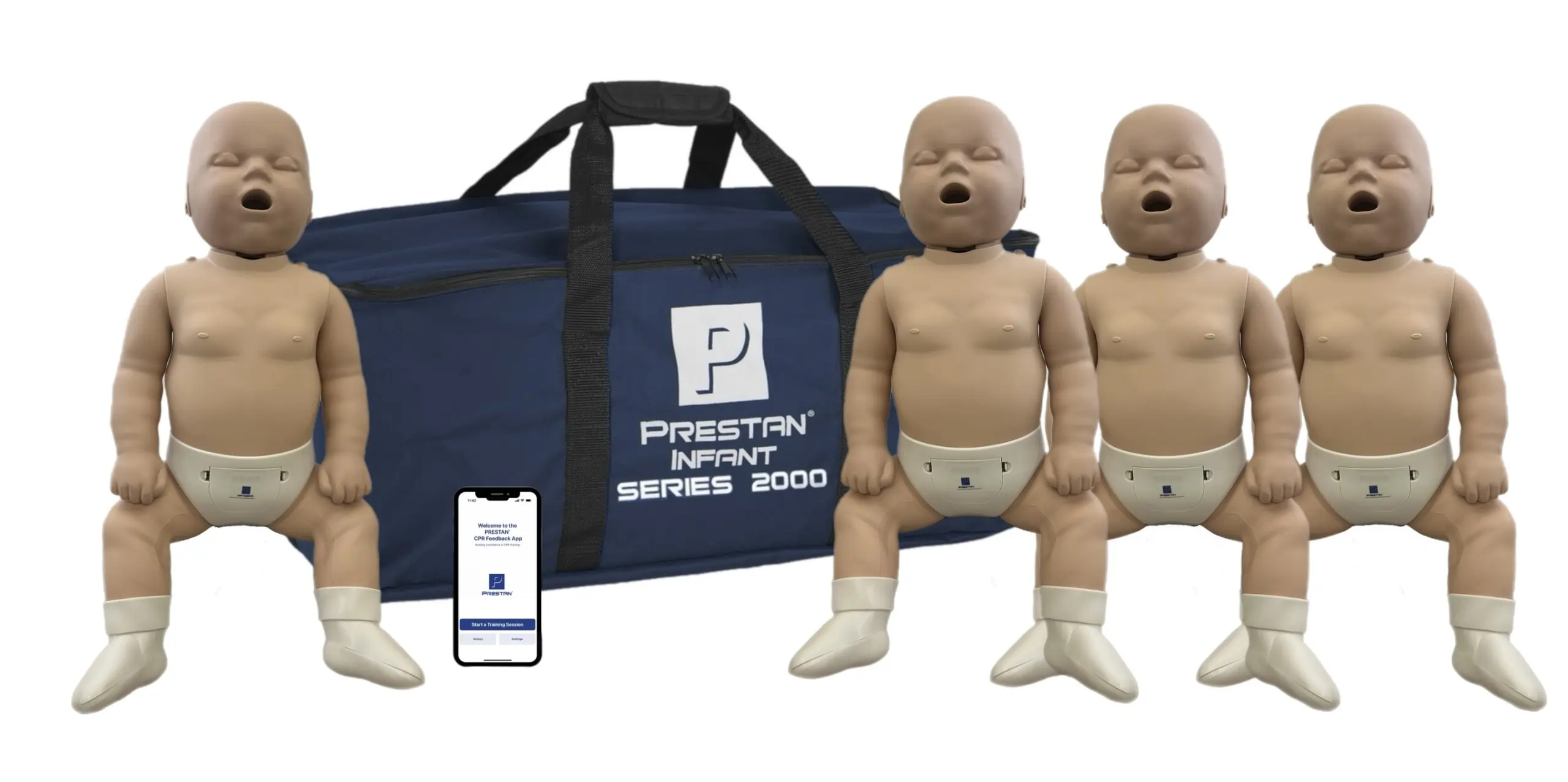
If you are a new instructor building inventory, look at CPR instructor packages Canada suppliers assemble. These bundles can save time and dollars, and they reduce the chance of forgetting a crucial cable or adapter. Verify the contents yourself. I have unpacked kits missing a remote or extra pad set. Reputable vendors correct that quickly, but you do not want to discover the shortfall five minutes before class.
A short readiness checklist for each class
- Charge or swap batteries for trainers, remotes, and any feedback displays the day before.
- Inspect pads for adhesion, cracks, and cable strain, and warm them to room temperature.
- Lay out manikin lungs, faces, and barriers in advance to keep class flow tight.
- Test voice prompts in the training language you will use, and set metronome volume to suit the room.
- Stage your CPR and first aid training kits so learners can reach gloves, shears, and wipes without breaking rhythm.
A five‑step framework to choose equipment that fits your team
- Inventory your installed AED brands and models, and confirm planned changes over the next 24 months.
- Define your learners by role, frequency of training, and environment, including language needs and ambient noise.
- Decide on the fidelity level you require for both AED trainers and CPR training manikins Canada vendors offer, balancing feedback features against simplicity.
- Model total cost, including consumables, cases, batteries, and spares, and stress‑test availability in your region.
- Pilot with a small cohort, gather feedback after two drills, and adjust before rolling out at scale.
Common pitfalls and how to avoid them
Some mistakes repeat. Trainers with poor adhesion pads derail practice as students peel and restick endlessly. Use fresh or freshly cleaned pads for the first class of the week. Another trap is over‑reliance on app‑based controls. If your facility’s Wi‑Fi is congested, your scenario controls may lag. Carry the hardware remote as a backup, and rehearse manual scenarios.
Storage eats gear. Trainers tossed into a bin with unprotected manikins end up with scuffed cases and kinked pad leads. Give each trainer its own pouch, and coil cables loosely. Battery leaks happen more than people admit. Set a calendar reminder every three months to check batteries and swap any that show corrosion.
Finally, some teams skimp on child practice. If your AED supports child mode, learners need to know how to activate it and where to place pads for a smaller chest. Do at least one child scenario every other class. The first time a learner flips into child mode without fumbling, you will feel the return on that five minutes.
Building a sustainable program
Gear choice is only the first layer. A sustainable program tracks equipment status, keeps a modest stock of consumables, and assigns clear responsibility for readiness. One manufacturing client uses a simple binder. After each class, the instructor notes pad condition, battery levels, and any malfunctions. That log caught a batch of failing remotes early and saved a month of frustration.
Rotate instructors through setups with different constraints. Run one class with the lights low to simulate a night shift. Run another next to a humming HVAC unit to test audio clarity. Swap to French prompts for a bilingual team so everyone hears both modes at least once. These small twists reveal whether your AED training equipment Canada purchases are pulling their weight.
Where bundles shine, and when custom beats a package
Instructor bundles are efficient when you are building from zero or outfitting satellite sites. You get compatible pieces, and the total cost often undercuts buying item by item. They also simplify training across locations because everything packs and unpacks the same way. Custom kits make sense when you already have manikins you like, or your AED brand demands a specific trainer for fidelity. A hospital training department I worked with insisted on brand‑matched trainers to align with clinical AEDs on the floors. The premium made sense in their context, given the tight coupling between training and real‑world equipment.
For community programs funded by grants, build in flexibility. Start with one solid trainer and two manikins, then add an infant and a second trainer as your schedule fills. Spread purchases across fiscal periods if needed. Good vendors in Canada understand public funding cycles and will help you stage deliveries to match them.
A note on warranties, returns, and vendor support
Read the fine print on warranties and where service is performed. A one‑year warranty is common, with some premium trainers offering two. Clarify whether pads are considered consumables without coverage, and how long a vendor typically takes to turn around repairs in Canada. Ask for a loaner unit policy. If you run weekly classes, a two‑week repair cycle without a loaner is a non‑starter.
Favour vendors who pick up the phone and can advise on compatibility. The best partners help you avoid mismatches between manikins and trainer pads or steer you toward CPR and first aid training kits that make sense for your sector, not just what is on promo.
Testing the setup before you scale
Before you https://cpr-depot.ca/about/ outfit every site, run a pilot with full‑session drills. Measure how quickly learners power the trainer, place pads, and deliver the simulated shock while maintaining quality compressions. Track voice prompt comprehension for both English and French if relevant. Watch for gear friction, like battery doors that pop open or cables that snag on manikin shoulders. A distribution centre near Winnipeg shaved 20 seconds off average first‑shock time after swapping to trainers with clearer pad placement graphics and adding shears to the training table. Small equipment tweaks produce meaningful gains.
Bringing it all together
Selecting AED trainers and companion gear is less about brand names and more about fit. Fit to the devices on your walls, to the way your people work and learn, and to the environments they occupy. Prioritize fidelity where it influences muscle memory, simplicity where complexity adds nothing, and durability where travel and weather take their toll. Use CPR instructor packages Canada suppliers offer when they align with your needs, and do not hesitate to customize when your context demands it.
If you take nothing else, take this: practice should feel like the real thing. When your learners grab the trainer, hear familiar prompts in the language that clicks for them, place pads that stick, and compress on a manikin that pushes back with the right resistance, they will move with purpose on a bad day. That is the goal, and with the right AED training equipment Canada can supply in every region, it is well within reach.