Laerdal Manikin Add-Ons and Consumables in Canada: What to Stock
If you run a Canadian training program, you learn quickly that consumables drive your simulation calendar. Instructors will work around software quirks and a scuffed torso, but a missing airway, a dead battery, or a bag of lungs stuck in transit will cancel a class. The right stock plan for Laerdal manikin add-ons and consumables respects Canadian realities: long shipping lanes, provincial funding cycles, bilingual compliance, cold weather that ruins adhesives, and a learner population spread from downtown Toronto to fly-in communities on Hudson Bay. I have been on both ends of the problem, rebuilding an airway trainer at 6 a.m. With the wrong lubricant, and placing disciplined orders in January so March fiscal dollars get used wisely. This guide distills those lessons into practical stocking advice for Laerdal manikins in Canada, with context on cross-brand setups that also field Prestan or other Medical simulation equipment Canada programs rely on.
Start with your fleet, not a catalog
Laerdal makes a broad range of manikins, from entry-level CPR torsos to High-fidelity CPR manikins with advanced physiology. You will not stock everything for everyone. Inventory follows the fleet and the way you teach.
Most Canadian programs I see fit one of four patterns.
First, community BLS programs teaching lay rescuer and healthcare provider CPR with Little Anne, Resusci Anne QCPR, and AED trainers. Second, hospital education departments running ACLS and team training with Resusci Anne Advanced SkillTrainer, MegaCode Kelly, or SimJunior, often paired with Airway Management Trainers. Third, paramedic and nursing schools with a mix of mid- and high-fidelity platforms like SimMan and SimBaby, plus task trainers for IV and IO. Fourth, rural and northern sites running compact kits that travel easily and share consumables across brands, including Prestan CPR manikins Canada programs often prefer for portability.
Audit what you actually have in rotation and how often it goes out. Pull the last year of class rosters and note learners per month, offsite travel days, and the number of stations you run concurrently. A modest BLS program can consume 300 to 600 lungs annually if you change them per learner pair. A tertiary care centre’s airway lab might run two to three full laryngoscopy days per month, each burning through 10 to 20 airways and a bottle of lubricant. Those numbers, not a universal list, will set your par levels.
What drives consumption and failures
Patterns are consistent across Canada.
Face-to-face training after the pandemic surge remains strong in healthcare and public safety. Filters and barriers remain a norm in many institutions. Adhesives on AED pads and ECG electrodes degrade fast in winter if deliveries sit in unheated areas. Batteries cause the most preventable session delays, especially if instructors assume the previous class left enough charge for the next SkillGuide or tablet. Connectors, valve seats, and small rubber parts fatigue faster in dry, heated rooms during January and February. Anywhere gear travels by road for long stretches, cases get banged up and quick-release clips crack.
The upshot is simple: stock for infection control, power, and wear items on moving parts. Keep extras of anything with adhesive. For high-fidelity airway and IV work, budget for realistic consumables rather than trying to stretch them past their performance window.
Core Laerdal families and their typical add-ons
Laerdal manikins Canada programs deploy fall into recognizable families, each with its own ecosystem of add-ons and consumables. Knowing how these ecosystems overlap helps you carry fewer SKUs without compromising readiness.
Resusci Anne and Little Anne, with or without QCPR, are the backbone of BLS. They share lungs and face replacements by model series, though QCPR variants add electronics that require attention to batteries and firmware. Add-ons that matter here include QCPR feedback devices, SkillGuide or app connections, and AED trainer compatibility plates.
Resusci Baby and Little Baby QCPR emphasize choking and infant CPR. Consumables center on lung bags, face masks, and sometimes airway valves. As with adult models, plan for batteries or charging where QCPR is involved.
Advanced providers use Resusci Anne Advanced SkillTrainer, MegaCode Kelly, and specialized Airway Management Trainers. Add-ons here move beyond simple lungs. Stock airways, tongues, epiglottis assemblies, teeth Medical simulation equipment Canada sets, lubricant that is confirmed safe for the materials, and skin overlays. If you train IV/IO, you will need replacement veins, skins, fluid bags, and tibial or humeral IO inserts by model.
High-fidelity platforms like SimMan, SimBaby, and SimJunior invite deeper planning. These are not throwaway-consumable devices, but they do consume several high-run items: intubation airways, chest skin overlays, simulation fluids compatible with the internal system, consumable electrodes or defib pad adapters, and IO bones if used. These systems live longer with consistent preventive maintenance, replacement filter elements, and correct lubricants.
Airway training manikins Canada programs use see heavy use during resident boot camps. Their consumable profile looks simple on paper, but it is material sensitive. Do not substitute generic lubricants unless Laerdal or your biomedical engineering team confirms compatibility. Stock extra upper airways, jaw and tooth components, and spare lung assemblies or reservoir bags, depending on model.
Finally, AED trainers, whether Laerdal-branded or third party, require a lot of pads. In mixed fleets, ensure you have both adult and pediatric sizes with the right connectors and adapters. Cold weather is rough on the gel; rotate stock so winter shipments are used promptly.
CPR training: lungs, filters, faces, and feedback
Most programs replace lungs either per learner pair or per session. Infection control policies differ, so set stock levels to support your chosen practice, plus a 10 to 20 percent buffer for damaged items. Face skins on many Laerdal torsos last well, but if you run high volumes, expect a few to tear around the nose or chin every 12 to 18 months.
Barrier devices depend on your policy. Some Canadian sites resumed direct ventilation on manikins with disinfection between learners, others still prefer one-way valve masks or filters. If you issue pocket masks, keep enough valve inserts and diaphragms to avoid reusing soft parts beyond their service life. If you use inline filters, order by case so lot control is simple and expiry dates are easy to track.
Feedback devices are part of the story now. Resusci Anne QCPR and Little Anne QCPR integrate with apps and SkillGuide. Plan power for whatever you use: rechargeable packs or AA batteries for accessories, spare charging cables with the right regional plugs, and a small set of USB wall adapters that do not vanish when a kit travels. Firmware updates improve reliability, so include a laptop or a managed tablet in your kit roster and assign someone time quarterly to check versions.
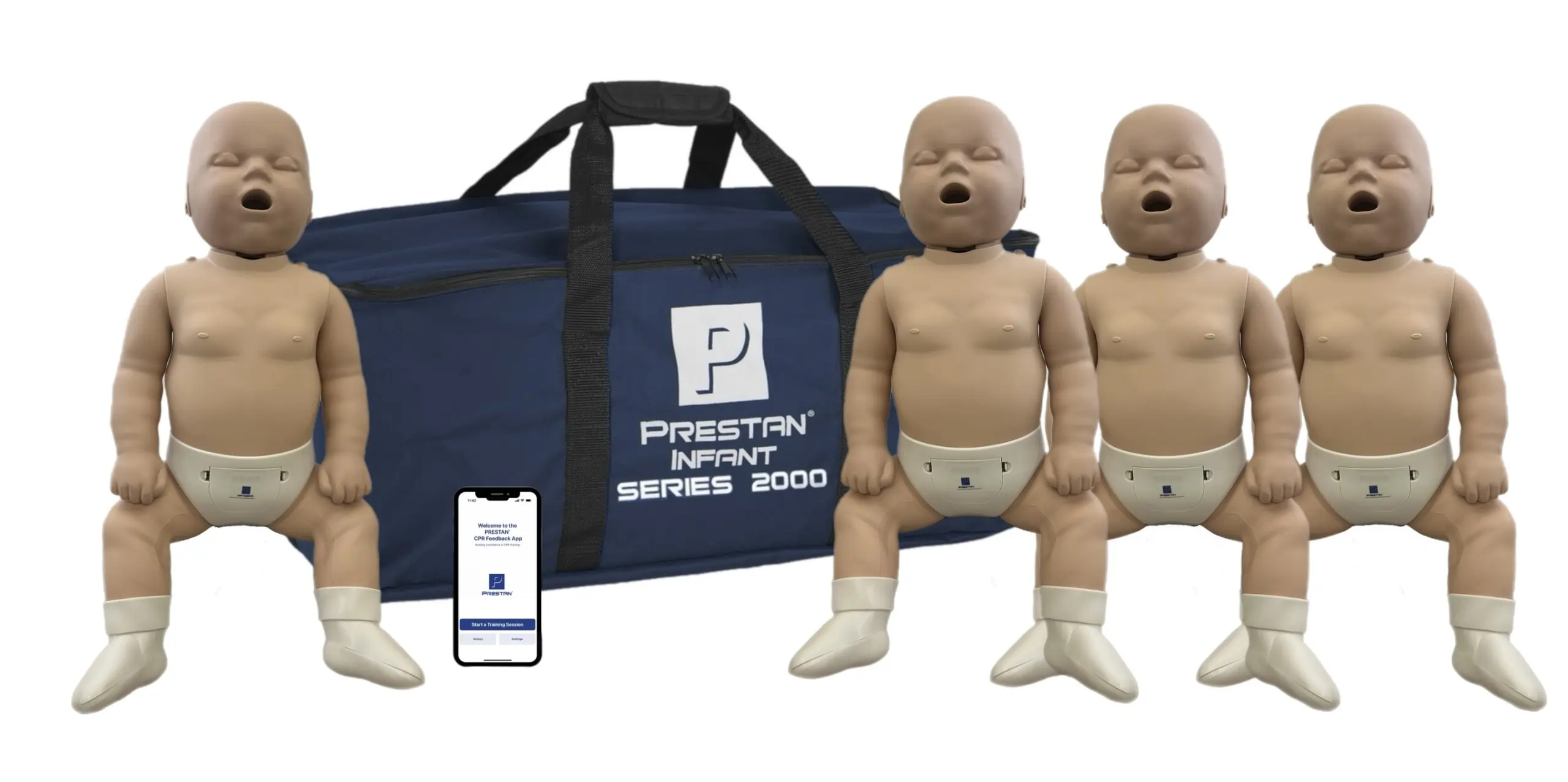
If your fleet includes Prestan CPR manikins Canada programs often deploy for community courses, you will juggle two supply streams. Prestan lungs and face shields do not fit Laerdal. Keep them in color-coded bins, and train instructors to pull the right set each time. It is common to keep Prestan in outlying locations because they are light, then bring Laerdal manikins Canada hospital departments prefer for recertification events where QCPR metrics are required. Plan consumables separately so a provincial order cycle does not leave one brand short.
AED training: pads, adapters, and the reality of winter
AED trainer pads are the most deceptively fragile item in a Canadian kit. In cold weather, the adhesive stiffens and fails. If you receive shipments during a cold snap, bring them to room temperature for a full day before use. Do not store them against an exterior wall or in an unheated loading dock. Rotate stock, and if you travel for outreach courses, keep pads inside an instructor’s backpack rather than a trunk. The adhesive will behave better in a warm classroom.
You will also need adult and pediatric pads, and sometimes brand-specific adapters if you attach to a manikin chest that measures pad placement or integrates with a training defib. If you cross-train with multiple public access AED brands, label and bag trainer pads by brand so instructors avoid mismatches under time pressure.
Finally, keep skin prep wipes and replacement chest skins handy. The wipes degrease manikin surfaces so pads stick better. Chest skins wear faster if learners repeatedly peel pads off oily surfaces.
Airway training: realistic parts, correct lubricant, and fatigue points
Airway practice eats consumables, but the investment shows immediately in learner confidence. For Laerdal Airway Management Trainers and advanced manikins used for intubation, I recommend carrying several sizes of replacement upper airway modules if your model supports modular swaps. Having a fresh airway when the existing one becomes over-lubricated saves a session. Tongue and tooth components crack if learners use too much force or leverage; one spare set per trainer keeps you moving.
Use only lubricants that Laerdal or your biomed policy approves. Some general-purpose gels swell elastomers and shorten part life. Order lubricant with your airway kits and treat it as a controlled consumable. Keep a simple note taped inside the case listing the approved product.
Expect to replace airway parts more often right after PGY1 boot camps or during paramedic intubation intensives, when repetition is high and technique is still forming. In months like July and August you might burn through triple the usual airway stock. Build that surge into your June reorder.
IV and IO training: fluid, skins, veins, and bones
For IV arms and torsos, it is tempting to stretch skins and veins. Learners notice. A realistic cannulation feel comes from intact elastomer skins and properly tensioned veins. Monitor seepage and replace vein tubing when it softens or leaks at connectors. Have spare luer caps, stopcocks, and a dedicated training fluid. In Canada, many programs use colored water or a food-grade dye. If you operate high-fidelity systems with internal pumps, follow the manufacturer’s fluid recommendations to avoid residue.
IO training on Laerdal platforms or compatible legs requires tibial or humeral bone inserts and skins. These are true consumables. Set expectations with faculty that each learner gets a fresh insertion site or bone according to your competency policy. Stock aggressively in the semesters when orthopedic and emergency rotations peak.
Cleaning, infection control, and what Canadian practice implies
Canadian infection prevention standards vary by institution, but the theme is consistent. Use approved manikin wipes or surface cleaners listed by the manufacturer. Alcohol-heavy products can craze plastics, and bleach can discolor skins. Keep a box of manufacturer-approved wipes in each case, with a visible reorder sticker when the pack drops to the last sleeve.
Post-pandemic, some sites still prefer disposable lungs per learner, others per day with disinfectant between users. Make a written policy, share it with instructors, and size orders accordingly. If you support multiple sites, assign a volunteer or coordinator to audit compliance twice a year. Every audit I have done found at least one site that drifted to improvised solutions. That drift shows up later as cracked parts and warranty questions.
Power, connectivity, and the forgotten spares
The smallest parts stop the most classes. In mixed fleets of High-fidelity CPR manikins and basic torsos, I carry a pouch with:
-
Fresh alkaline batteries in the sizes my QCPR devices, SkillGuides, and remotes use, labeled by month of purchase and rotated quarterly.
-
A pair of known-good USB cables and wall adapters for whatever tablets or feedback devices you use, plus a compact power bar for rooms short on outlets.
That is one of the two allowed lists.
In winter, batteries drain faster in cold vehicles. Do not leave kits in cars overnight if you can help it. If your budget supports it, move to rechargeable packs where Laerdal supports them and maintain a small charging station near your storage shelves. Label chargers with the manikin or device they belong to, and QR-code link them to a simple online spreadsheet so anyone can report a missing charger quickly.
Connectivity runs beyond power. If your QCPR systems talk to an app, ensure the tablets are updated, on a managed Wi-Fi network if needed, and not burdened with other apps. Firmware updates matter. Set a recurring calendar entry in your program management tool to check for updates during quieter months like December.
Storage and logistics in Canada: small details that pay off
I have seen more manikin damage from storage than from training. In a country where gear lives in hall closets and travels over rough roads, packaging matters. Keep the original cases when possible. If you use Pelican-style cases, add cut foam to prevent shifting. Put silica gel packs in cases to reduce moisture. It costs pennies and slows down mildew on straps and pads in coastal or northern climates where humidity spikes.
Label cases in English and French for community outreach. It is not just a courtesy, it helps when a team member from Quebec borrows a kit or when you run training in bilingual areas. Some public programs also expect bilingual participant materials. If your funding comes with that expectation, order consumables with bilingual packaging when available, and keep a binder with bilingual quick-start sheets for instructors.
For remote and Indigenous communities, the best practice I have seen is a two-bin system: one live bin on site with all consumables for the next three to six months, and a sealed resupply bin stored at a regional hub ready to ship. Weather and flights are unpredictable. With two bins, a canceled resupply flight does not cancel a class.
Planning volumes and reorder cadence
A simple framework helps, even if you refine it later.
- Establish a per-learner consumption rate for each consumable and multiply by your monthly learner forecast. Keep a 20 percent safety margin for adhesives and airway parts, 10 percent for batteries and wipes.
That is the second and final list.
Track this in a lightweight sheet shared with all instructors. Ask them to update the sheet after each class with actual usage. Over a quarter, the variance will settle and you will know whether your par levels are too tight or too generous.
Lead times into Canada vary. For common items like lungs, faces, and wipes, you will see one to three weeks from national distributors under normal conditions. Specialty airway modules, IO bones, and high-fidelity skins can take four to eight weeks, longer during fiscal-year rushes in February and March when everyone is spending. If you rely on year-end funds, place complex orders in January and avoid last-week-of-March deliveries that risk missing your receipting deadlines.
Compatibility, cross-brand realities, and when to standardize
Many Canadian programs mix Laerdal with other brands because grants arrive in waves or different sites buy locally. There is nothing wrong with that if you manage consumables cleanly. Color-coding bins by brand and labeling shelves with both the English and French product names cuts errors. Keep adapters and unique parts in small, rigid cases, not zip bags that split in the cold.
If you can standardize on one brand for a course type, you will cut consumable SKUs by a third. For example, standardizing BLS on Laerdal Little Anne QCPR consolidates lungs, faces, feedback gear, and pads to one set of parts. If budget or history locks you into a mixed fleet, standardize at least within each location or instructor team so traveling instructors are not hunting for the right parts under pressure.
Prestan remains a strong option for portable community courses. Laerdal excels where advanced feedback and integration matter. Choose based on the instructional goal, not brand loyalty, and stock consumables accordingly.
Edge cases you only learn once
Winter shipping is a consumable event. If a pallet sits in an unheated warehouse at minus 20, adhesives and some elastomers will be unhappy. Ask your distributor to flag cold-sensitive items and aim for deliveries midweek, mid-day, when someone can bring them inside promptly.
Wildfire smoke in summer affects interior air quality. Filters and soft parts absorb odors. Keep sealed containers for wipes and soft consumables, especially if your storage area lacks robust HVAC. It sounds fussy, but learners notice stale smells on barrier devices.
Adhesive-backed sensors and defib pad trainers fail early on textured manikin skins that have been cleaned with the wrong product. If you inherit a fleet with sticky residue, budget a half day to strip and reset surfaces with manufacturer-approved cleaner. It pays off with longer pad life.
Warranty, service, and small parts kits
Laerdal warranties are generous when you follow the manual. They are less forgiving when cracked plastics show evidence of unapproved cleaners or lubricants. Keep a short written protocol in each case: approved cleaners, approved lubricants, basic do-not-dos. Train CPR equipment supplier Canada your instructors to stop a session rather than force a stuck connector.
Build a small-parts kit for each manikin family you use often. Include O-rings, clips, a spare airway or valve, and a simple tool like a small Phillips and flat screwdriver. Label the kit and replenish it every three to six months. Ten minutes of prep here prevents an entire session from derailing.
Budgets, bundles, and Canadian procurement rhythms
Most public sector programs run April through March fiscal calendars. Your busiest ordering months will be April, for baseline restock, and January to March, for topping up before year-end. Vendors serving Medical simulation equipment Canada markets often offer bundles at those times. Bundles make sense for lungs, faces, wipes, and AED pads. For specialized items, bundles sometimes include parts you do not need; price them line by line.
Know your tax context. GST/HST applies, with provincial nuances if you buy through a hospital or educational institution with rebates. If you are buying with federal or provincial grant funds, note any Canadian content or bilingual packaging requirements. It is rare for consumables, but it occasionally appears in grant terms.
Where to buy and how to avoid backorders
In Canada, buy through authorized distributors with domestic stock whenever possible. You will get Canadian warranties, bilingual documentation, and predictable lead times. When items are on global backorder, ask for partial shipments and alternatives that are validated for your models. Some lungs and filters have cross-model compatibility within Laerdal families; distributors can advise without guessing.
Establish a named account with your preferred distributor and ask for a dedicated contact. When wildfire season or winter storms disrupt logistics, a person who knows your program can often reroute a shipment or release stock from another region.
A practical stocking checklist for Laerdal programs in Canada
This is not a one-size list, but if I were equipping a mid-sized Canadian training department running BLS, ACLS, and airway labs, my shelves would hold these steady-state items with par levels set by the framework earlier.
-
CPR lungs matched to each Laerdal model in service, plus compatible face skins and a case of manufacturer-approved manikin wipes with bilingual labels when available.
-
AED trainer pads, adult and pediatric, stored warm, with skin prep wipes and spare chest skins; adapters labeled by brand if cross-training on public AEDs.
-
Airway modules or parts for your Laerdal Airway Management Trainers and advanced manikins, including approved lubricant, spare tongues and teeth, and at least one full upper airway per active trainer.
-
IV and IO consumables: replacement skins, veins, training fluid supplies, luer caps and stopcocks, tibial or humeral IO bones and skins as per your models.
-
Power and connectivity spares: fresh batteries for QCPR accessories, labeled chargers for rechargeable packs, known-good USB cables and wall adapters, plus a small power bar for classrooms with limited outlets.
Remember, that is within our two-list limit.
Bringing it together
Stocking add-ons and consumables for Laerdal manikins in Canada is not about buying everything you might use. It is about predicting what you will absolutely use, respecting the ways Canadian weather and geography punish adhesives and batteries, and building habits that keep small parts from becoming big problems. Marry a realistic consumption model to your course calendar, set conservative par levels on winter-sensitive items, and maintain simple, bilingual labeling that travels well between sites. Cross-brand fleets that include Prestan or other models are fine if you keep their parts separate and instructors trained on the differences. When in doubt, favor reliability and learner experience over squeezing one more session from a tired airway or a tacky AED pad. The classes run smoother, the gear lasts longer, and your phone rings less at 6 a.m. On course day.