Laerdal Manikins in Canada: Which Model Fits Your Training Program?
The right manikin shapes skill, confidence, and outcomes. That sounds lofty until you stand in front of a class of new lifeguards or a room full of first-year residents and watch body language shift when feedback gets real. In Canada, the choice is not only about features, it is also about climate, bilingual teams, provincial curricula, and shipping a repair part to a northern community in February. Laerdal manikins cover the full arc, from basic CPR to fully immersive patient simulation. Deciding which model fits your training program requires a clear read on what you teach today and what you plan to teach two years from now.
Start with a quick needs scan
The most successful purchases I have seen start with a short, honest inventory. Keep it focused on outcomes you must deliver in Canada, not every feature that looks impressive at a trade show.
- Who are your learners and what certifications do they need to pass, by name and issuing body?
- How many learners are in the room at once, and how often do you run courses?
- What feedback data do you need to capture, store, or report for compliance or grants?
- What skills go beyond compressions and breaths, such as airway management or team communication?
- Where will the gear be used and stored, including travel to satellite sites or remote communities?
Once you sketch those answers, models begin to sort themselves into practical groups.
The CPR spectrum: from community classes to clinical validation
Most programs in Canada fall into one of three CPR contexts: public access training through community groups or workplaces, healthcare provider BLS in hospitals and clinics, and team-based resuscitation for code blue or EMS. Laerdal manikins Canada cover all three, and the exact fit depends on how you measure and debrief.
For community classes where you need reliable chest rise, clear landmarks, and fast setup, you can build an efficient lab with Little Anne QCPR and Little Baby QCPR. Both are durable, light enough to carry through the back entrance of a community center, and easy to disinfect between sessions. The QCPR apps give you objective numbers on rate, depth, recoil, ventilation volume, and hand position. With four to ten manikins spread across a gym, an instructor can spot a lagging student from across the room by glancing at the instructor tablet. I once watched a mixed group of teachers and maintenance staff improve mean compression depth by 8 to 10 millimeters within twenty minutes just by seeing live feedback instead of vague encouragement.
Healthcare provider BLS needs a notch more realism and repeatability, especially if you document competence for audits. Resusci Anne QCPR offers finer-grain feedback and more realistic chest stiffness than the Little series. It pairs with SkillGuide or the QCPR apps, and the thorax tolerates repeated AED pad placements without tearing. That matters when you run back-to-back hospital classes. If your learners include pediatric nurses or respiratory therapists, consider adding Resusci Baby QCPR so students experience infant chest recoil and appropriate ventilation volumes. Switching between an adult and an infant model within the same session anchors muscle memory better than any lecture.
Team-based resuscitation adds choreography. You need clean data for debrief, enough physical realism to keep teams engaged, and consistent setup so a 3 a.m. Code simulation looks like what they face on the ward. Resusci Anne QCPR with Wireless functionality supports high-quality CPR metrics while your team rotates roles. It accepts real defibrillation training pads when used with appropriate trainers and can take the abuse of repeated bag-mask ventilations. The ability to export session data to a debrief file helps you make the case for targeted refresher drills next quarter.
Where Prestan fits the picture
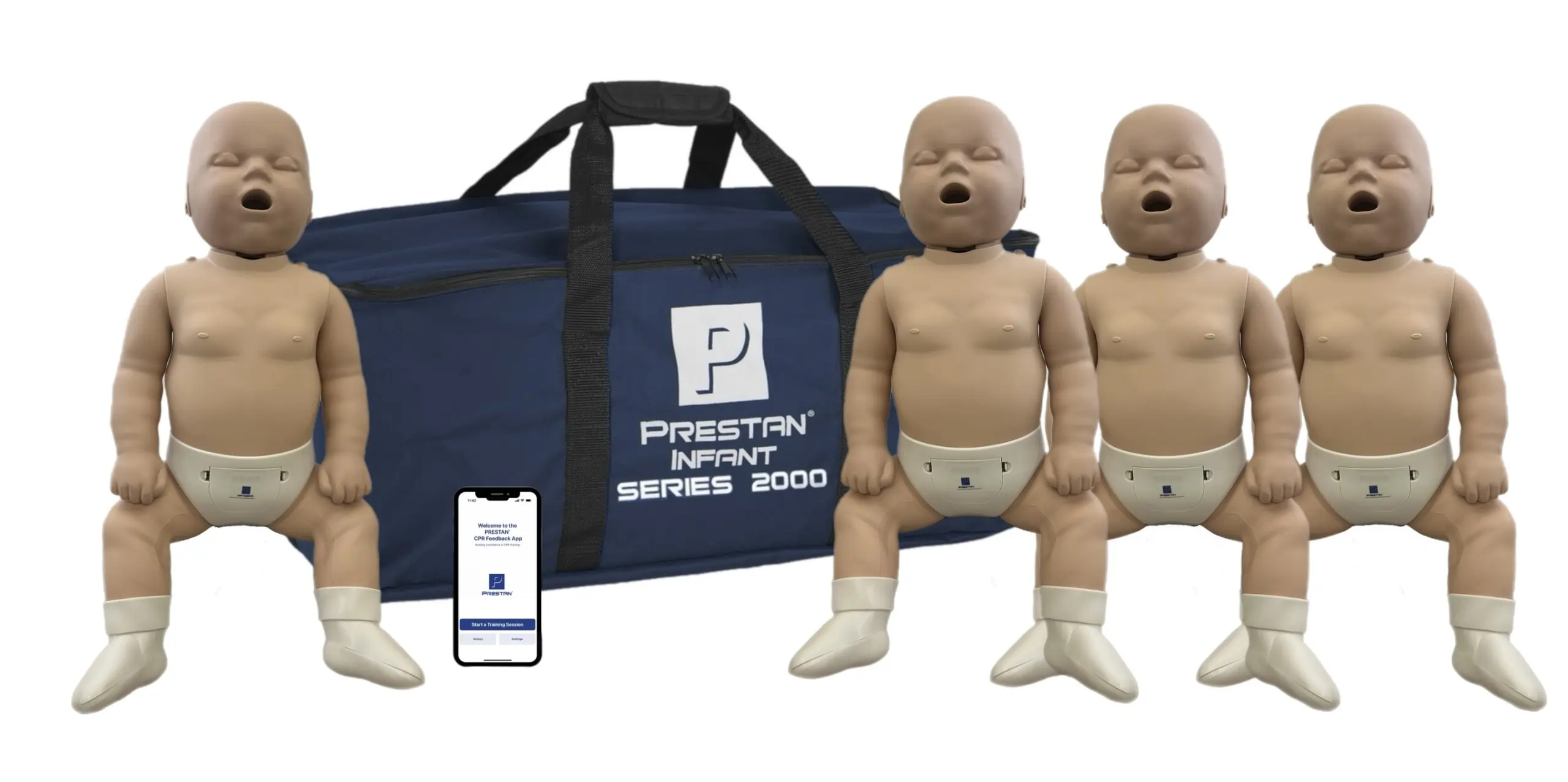
Prestan CPR manikins Canada deserve honest mention, because budget and transport logistics drive many decisions. Prestan Adult and Infant Series 2000 manikins provide rate and depth feedback with a compact monitor, and their torsos are light enough to stack five in a single rolling case. For corporate wellness programs, large public courses, or instructors who crisscross provinces in a hatchback, the value is hard to beat. I have run blended classes with Prestan units for quick stations and Laerdal Little Anne QCPR for summative assessment. The mix kept costs down while preserving high-fidelity scoring where it mattered.
If your program must document detailed metrics at an individual level for clinical privileging or grant reporting, Laerdal’s QCPR ecosystem still holds the edge. The apps capture more parameters and present the data in a way that matches how Canadian hospital educators debrief.
Airway training manikins: what works and why
Airway skills separate a passable BLS class from a program that prepares clinicians for real shifts. Airway training manikins Canada range from simple heads to full torsos with realistic chest rise. Laerdal’s Adult Airway Management Trainer has a lifelike airway path from teeth to trachea. You can practice head tilt, chin lift, jaw thrust, oral and nasal airway insertion, bag-mask ventilation, supraglottic airway placement, and endotracheal intubation. When a student slips into the esophagus, you see stomach inflation and can coach corrective technique. The tactile feedback at the glottic opening is closer to a human than the budget options, which matters when you start using video laryngoscopes that make first attempts look deceptively easy.
Infant airway skills change everything: smaller anatomy, faster desaturation, and a narrow window for effective mask seal. The Infant Airway Management Trainer provides proportional anatomy that forces proper positioning and gentle technique. If your learners are paramedics or rural nurses who may intubate once a year, the difference between a good trainer and a passable one shows up in laryngoscope pressure and the temptation to lever on teeth. I prefer to run a short sequence: BVM only, then supraglottic, then a timed intubation with a two-person approach. You can do all of that cleanly on the Laerdal platforms.
Some teams ask for advanced difficult-airway features like severe tongue edema or laryngospasm. Dedicated difficult-airway trainers exist, and Laerdal has task trainers that simulate certain complications, but be clear with buyers about scope. For day-to-day education in Canadian hospitals and colleges, a standard Adult and Infant Airway Management Trainer pair, coupled with good scenarios and coaching, covers most competencies. If you routinely train anesthesia residents or transport teams, then look at patient simulators that integrate airway with physiology.
High-fidelity CPR manikins and full patient simulation
When someone asks about high-fidelity CPR manikins, they usually mean manikins that not only measure compressions but also respond physiologically. Laerdal sits at the center of that space with SimMan ALS, SimMan 3G and its successors, SimJunior, SimBaby, and Nursing Anne Simulator. These platforms connect chest compressions, ventilation, pulses, breath sounds, ECG rhythms, and real-time scenario control into a single patient.
For an EMS base or a teaching hospital in Canada, SimMan ALS offers a practical blend: robust airway options, palpable pulses, defibrillation with real equipment, and scenario-driven vital medical simulators Canada signs, without the price tag of the top tier. SimBaby delivers the same design logic for pediatric teams, with airway anatomy and physiology that demands correct drug dosing, mask fit, and energy selection. SimJunior fits programs that handle older pediatrics and want to emphasize assessment and communication alongside resuscitation.
High-fidelity platforms deliver their real value in debrief. You capture compression fraction, hands-off intervals, ventilation metrics, time to first shock, drug administration timing, and team communication. A five-minute playback often does more for a team’s next shift than an hour of slides. The catch is support: you need faculty time, IT reliability, a space you can darken or soundproof a little, and a plan for service. In Canada, those programs thrive when someone owns maintenance and scenario design, and when you have a local distributor who can get a part from Toronto or Montreal within a week, not a month.
Expect the capital outlay to reflect that complexity. A high-end simulator can run into six figures in Canadian dollars by the time you include options, installation, and initial training. Annual service contracts and software updates add recurring costs. That is not a reason to avoid them. It is a reason to map the simulator to accreditation standards, code metrics, and research output so the device stays booked and pays its way in outcomes, not just in invoices.
Total cost of ownership in the Canadian context
It often surprises new program leads how much value hides in the small stuff. Consumables cost real money over a year: lungs, airways, face skins, jaw assemblies, and filters. Budget a predictable per-student cost. With heavy use, plan to refresh the skin on chest landmarks at least annually to keep tactile cues consistent. If you use AED trainers that leave adhesive residue, set an end-of-day cleaning checklist with a gentle, compatible wipe. Harsh disinfectants will shorten the life of foam and vinyl, and in a dry winter room the materials become brittle faster.
Power and connectivity matter. QCPR apps usually run on iOS or Android devices, and you should test your exact tablet models before large purchases. Bluetooth reliability suffers in gyms where ten classes run at once. Split the room into zones with separate instructor devices if you teach at scale. In hospitals, check your facility’s Wi-Fi policies before expecting cloud sync. Some Canadian sites require that training devices stay on a segregated network.
Warranties and service vary by model and distributor. Most basic manikins carry at least a one-year warranty, and patient simulators include longer coverage or optional service plans. In Canada, walk through service options in detail. Ask where the unit will be repaired, what loaners exist, average turnaround times, and whether calibration requires shipping or in-field visits. A week without your main simulator can cancel an entire rotation.
Finally, consider taxes and funding windows. GST or HST applies, which affects list pricing when you compare cross-border quotes. Grants often open and close on tight cycles in Canada, so it helps to have an itemized quote with optional lines ready. Organizations like Simulation Canada host events and mailing lists where funding opportunities and shared practices are posted. Tapping that community early can save months.
Logistics that Canadian programs learn the hard way
Bilingual materials save time and frustration. Pick manikins and apps with English and French support if you run programs in Quebec or bilingual hospitals. The QCPR apps are available in multiple languages, including French, which helps learners follow feedback without translation in the moment.
Transportation looks different when half your courses happen in winter. Cases with proper wheels and reinforced corners earn their keep on slushy sidewalks. Keep a spare lungs kit and extra alcohol-free wipes in the case. If you teach in remote communities, ship consumables in advance and carry a small repair kit with valve seats and screwdriver bits you know fit your models. I have used a small headlamp to check airway seals more times than I want to admit in poorly lit halls.
Storage conditions affect lifespan. Try to avoid leaving manikins in unheated garages or vehicle trunks for long stretches. Vinyl and plastics do not love freeze-thaw cycles. In hospitals, coordinate with Infection Prevention and Control to select disinfectants that meet policy without damaging manikin surfaces. Avoid chlorine-based solutions on skins unless the manufacturer explicitly approves them.
Choosing by program type
A public access or workplace safety program training hundreds of learners each quarter benefits from Little Anne QCPR and Little Baby QCPR in multi-packs. The math is simple: the per-learner cost stays low, setup is fast, and you capture objective data to show a sponsor or a provincial partner. Add a few Prestan units if you need overflow capacity for peak months; they stack neatly and let you surge without buying more tablets.
Colleges teaching nursing or allied health students across multiple cohorts should step up to Resusci Anne QCPR and Resusci Baby QCPR. The goal is consistency across instructors and campuses. Store your debrief files in a shared folder, build a short rubric for pass/fail thresholds, and sync the checklist with your curriculum committee so no one debates what “adequate recoil” means the week before finals.
Hospitals and EMS services running mock codes need two layers. For frequent skills refreshers on wards, keep a Resusci Anne QCPR available with a standard setup and a laminated quick-start card. Staff respond better when they can run a focused practice in ten minutes between tasks. Then schedule monthly or quarterly team simulations with a patient simulator like SimMan ALS or Nursing Anne Simulator. Use a standard debrief template so teams see trends month over month instead of only reviewing one event in isolation.
Colleges and hospitals teaching airway management should invest in an Adult Airway Management Trainer and an Infant Airway Management Trainer. Treat them as core tools, not special-event gear. Rotate every learner through three short airway stations in each term: bag-mask seal optimization, supraglottic insertion, Medical simulation equipment Canada and intubation with confirmation and securing. When budgets allow, add a dedicated pediatric platform for the youngest airway, because mask seal technique at that size is entirely different.
When Prestan makes more sense
I have recommended Prestan more than once. If your program’s outcomes are purely certification with straightforward documentation, and you need to keep instructor kits light and affordable, Prestan CPR manikins Canada can be the right call. Their feedback is clear enough to coach, their consumables are inexpensive, and you can move fast between corporate sites. Where I draw the line is in data-rich debriefs for clinical settings. If a hospital’s quality council expects quarterly trends on compression depth distributions or ventilation volumes by unit, Laerdal’s ecosystem is worth the premium because it collects, displays, and exports data in formats hospital educators already use.
Try before you buy
The best way to confirm fit is to run a pilot with your learners. Many Canadian distributors will loan a demo unit or run an on-site session so you can compare, side by side, a Little Anne QCPR and a Prestan Adult Series 2000 or a Resusci Anne QCPR and your current torsos. If you teach in a northern region, ask for a road case and do a mock travel day, including loading into your vehicle and setting up in the space you actually use.
Events hosted by Simulation Canada, Heart and Stroke instructors’ meetings, and paramedic association conferences often include hands-on sessions. Take photos of your typical classrooms, measure table heights and storage spaces, and bring those details to conversations with vendors. If a model requires a larger footprint than you have, it will sit in a closet after the novelty wears off.
A quick model-to-need map
Use this as a fast cross-check once you have your needs written down.
- Community or workplace CPR classes at scale: Little Anne QCPR and Little Baby QCPR, with optional Prestan units for overflow or travel-heavy instructors.
- Hospital or college BLS with documented competence: Resusci Anne QCPR and Resusci Baby QCPR for higher-fidelity feedback and durable surfaces.
- Team resuscitation drills with debrief: Resusci Anne QCPR for frequent practice, plus SimMan ALS, SimJunior, or Nursing Anne Simulator for scenario-based sessions.
- Airway skills across adult and infant: Adult Airway Management Trainer and Infant Airway Management Trainer as everyday lab tools.
- Rural or remote programs with travel constraints: Balance Prestan for logistics with a core set of Laerdal manikins Canada where you need detailed, exportable QCPR data.
Budget strategies that work
Stagger purchases across fiscal years when you can tie each acquisition to a new competency or cohort. For example, Year 1 could fund Little Anne multi-packs for community outreach, Year 2 could add Resusci Anne QCPR for hospital validations, and Year 3 could bring in a patient simulator tied to a code blue improvement plan. This kind of phasing aligns well with provincial funding approvals and keeps maintenance loads manageable.
Document consumables and cleaning supplies in your budget narrative. Funders are more comfortable approving higher-end devices when they see a grounded plan for ongoing costs. If you pursue grants tied to outcomes, commit to specific metrics: target a 15 percent improvement in compression fraction across three units, or a 10-second reduction in time to first shock in code simulations within six months. Those numbers are realistic and defensible, and they speak the language of quality committees.
Buying through Canadian channels has advantages beyond currency and taxes. Local distributors usually handle Health Canada compliance, bilingual packaging, and CSA electrical certifications for powered devices. That reduces procurement friction with your supply chain department.
Final thoughts from the lab and the field
Medical simulation equipment Canada buyers face an enviable problem: there are more good options than ever. Laerdal’s line gives you a path from a first CPR practice to complex, team-based simulations with physiological response. Prestan fills a real need for cost-effective, portable CPR stations that stand up to constant travel. High-fidelity CPR manikins and patient simulators earn their keep when you use their data and debrief tools to tune performance, not just to check a box. Airway training manikins Canada options allow daily, repeatable practice of the skills that fail under stress without practice.
If you are unsure, remember that the right model is the one that gets used, fits your spaces, speaks your learners’ languages, and produces data you can act on. The rest is preference. Start with the essential few, test them in your real settings, and build a program that grows with your teams rather than chasing features your instructors never touch.