The Future of Medical Simulation Equipment in Canada: Trends to Watch
Canadian health care lives with two tensions at once. On one hand, clinicians must be prepared for rare, high-stakes events that leave no room for error. On the other, budgets, staffing, and geography challenge every hour of education time. Medical simulation has become the bridge between these realities. It lets educators surface risk, rehearse clinical judgment, and pressure test team communication in a controlled setting. The next few years will stretch simulation in new directions, from data-linked manikins to mobile labs that reach small northern communities. The winners will be solutions that deliver measurable competency, travel well, and slot cleanly into how Canadian schools, hospitals, and EMS agencies already work.
Where Canada stands now
Schools of medicine and nursing in every province have simulation infrastructure, some dating back more than a decade. Hospital-based simulation ranges from monthly mock codes on a ward to dedicated centers that run full scenarios with standardized patients and high-fidelity equipment. Paramedic services use manikins for CPR, airway management, trauma, and obstetrics, often in garages or mobile units between shifts. Dental, respiratory therapy, and anesthesia programs are close behind.
The baseline looks like this: basic task trainers for procedures, medium to high-fidelity manikins for team scenarios, video capture for debrief, and a learning management system to log activity. Many programs already use Prestan CPR manikins with visual feedback for compression depth and rate, while others run Laerdal manikins integrated with software that records compressions, ventilations, and timing. Virtual reality appears in pockets, mostly for anatomy, basic procedural steps, and early exposure to critical events. The country’s bilingual needs, privacy laws, and distances have shaped what succeeds. Devices with bilingual interfaces, service centers in Canada, and reliable parts supply tend to stick.
The next wave is less about novelty and more about integration, portability, and proof of impact.
From islands of gear to connected ecosystems
Early simulation centers bought equipment piecemeal. An airway head here, a birthing simulator there. It worked, but data lived in silos. An instructor might export a CSV of CPR scores, while another filed paper checklists for pediatric scenarios. Today, Medical simulation equipment in Canada is moving toward connected ecosystems that make assessment and maintenance more seamless.
Interoperability is the quiet theme. Educators want a single sign-on, easy roster import from their student information system, and scenario content that runs across different models without reprogramming every cue. Several vendors now expose APIs or enable data exchange so that performance metrics can live in the same record as course grades and clinical evaluations. When a hospital educator runs mock codes in the ICU on a Tuesday and a ward on Thursday, the platform can aggregate metrics over time, not just one-off session reports.
The ecosystem mindset also changes maintenance. Smart batteries, self-diagnostics, and cloud-based service logs cut downtime. A province-wide program can see which sites need replacement lungs, valves, or chest skins before the next rotation. This seems mundane until a rural college loses a week of airway training because a tiny part went missing and shipping from abroad took ten days. Canadian distributors with local inventory and bilingual technical support reduce that risk more than any futuristic feature ever could.
High-fidelity CPR manikins and objective feedback as standard of care
Earlier training often relied on instructor observation alone. The shift toward objective metrics has been decisive. Compression depth, recoil, rate, ventilation volumes, and hands-off time determine outcomes in cardiac arrest, and those can be measured reliably. High-fidelity CPR manikins, once a luxury, now anchor basic and advanced life support training in hospitals and EMS services alike.
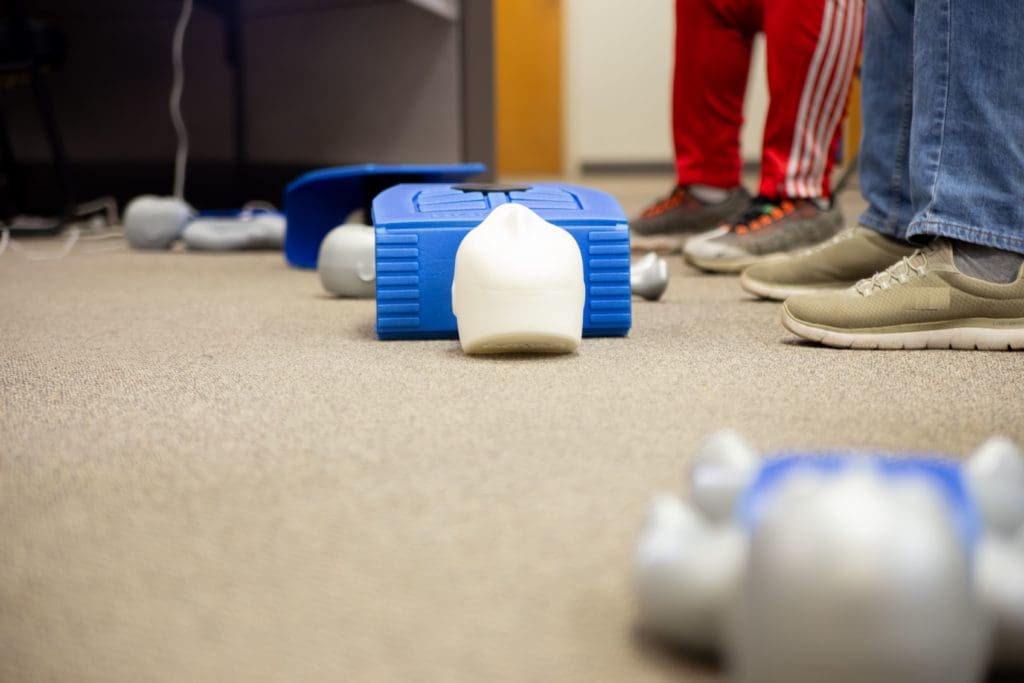
Prestan CPR manikins Canada offerings have become familiar in entry-level courses because they are durable, compact, and provide simple, visible feedback. Laerdal manikins Canada options often integrate with software that records detailed CPR metrics session by session. Both approaches serve a purpose. If an agency trains 800 paramedics annually, a fleet of sturdy torsos with quick setup can be more valuable than a few complex devices that require a technician. If a teaching hospital runs resuscitation quality improvement across units, the more instrumented systems pay off by exposing small drifts in technique.
The practical difference comes during debrief. With objective data, an instructor does not say, “compressions looked a bit fast.” Instead, they show a time series that reveals a rate creeping from 120 to 140 during the second minute, then correlates it with a ventilations spike that stole chest time. Over a cohort of 100 learners, this feedback reliably tightens performance. Many programs now repeat skill checks quarterly or semiannually rather than just when cards expire, because the data make it easy to target the right learners with the right refreshers.
One operational reality in Canada is space. Community colleges and rural hospitals need gear that fits into closets and sets up in minutes, especially if it shares space with telehealth carts and portable ultrasound. High-fidelity CPR units that run off battery for a full day, connect over Wi-Fi to an instructor tablet, and wipe down quickly after use have an advantage. So do models with consumables that are easy to source domestically. A school that budgets 2,000 to 3,000 dollars annually per classroom on replacement lungs and valves will choose one supplier over another based on supply reliability as much as price.
Airway management gets more nuanced, and more portable
Airway management is one of the areas where realism matters most. Learners should feel resistance, see the glottis under video laryngoscopy, and encounter anatomic variations that force judgment rather than rote action. Airway training manikins Canada suppliers have raised the bar on tactile cues and compatibility with the devices clinicians actually use in the field.
What now distinguishes advanced units is not just the tongue and epiglottis. It is how saliva, secretions, and swelling can be simulated, and whether instructors can introduce a difficult airway mid-scenario without a reboot. Neonatal and pediatric airways need special attention, because neonatal intubation volumes continue to fall. Programs are moving toward short, frequent practice sessions on neonatal heads attached to realistic torsos so that learners practice positioning and gentle technique, not just tube placement.
There are trade-offs. Modular heads with replaceable parts tend to last longer in high-volume use, but they may offer slightly less lifelike feel. Fully integrated, highly realistic heads look and feel fantastic but can be down for service longer if something breaks inside. In Canadian winter, airway models that tolerate cold storage in transport cases without deforming become a practical concern for mobile teams that drive between sites at minus 20 Celsius. A good rule is to standardize on two or three models across a region, then keep one or two spare heads in central inventory that can be couriered same day.
Scenario design focuses on decision points, not gadget count
There was a time when success meant running the manikin through every bell and whistle. That urge has faded with experience. Strong Canadian programs now design scenarios backward from critical decision points and measurable learning objectives. The manikin and room technology support those objectives, not the other way around.
A sepsis scenario might hinge on early recognition, fluid resuscitation steps, and escalation when lactate remains high. The equipment needs to let learners assess perfusion, start lines, run a pump, and administer antibiotics under time pressure. It does not need to simulate every last physiologic parameter if those do not change decisions. The same principle applies to obstetrics. A shoulder dystocia drill lives or dies by team communication, prompt recognition, and maneuvers like McRoberts and suprapubic pressure. The fidelity required lives in birthing anatomy, not necessarily in a high-end cardiac rhythm display. Judging realism by how well a device enables targeted, repeatable practice is more useful than counting features.
Data, privacy, and proof of competence
Education leaders increasingly face a request from quality and safety teams: show how simulation translates into better clinical outcomes or fewer adverse events. That asks for data beyond attendance sheets. It means demonstrating that learners met defined thresholds on objective measures and that retention persists after three, six, or twelve months.
Modern platforms now tie manikin outputs to learner profiles securely, generating competency portfolios that pass audits. In Canada, these systems need to respect PIPEDA at the federal level and provincial privacy laws such as PHIPA in Ontario, HIA in Alberta, and similar frameworks elsewhere. The safest pattern is to avoid storing any clinical identifiers from real cases in debrief notes, keep user access narrow, and retain only the minimum personal information required to attribute performance. Some centers keep debrief videos local rather than cloud-based, especially for team simulations in real clinical areas.
When reporting to leadership, educators often use a few straightforward indicators: percentage of learners meeting CPR compression and ventilation targets, time to first defibrillation in mock codes, fraction of airway attempts with confirmed placement within a set time, and adherence to checklists during high-risk handoffs. Over a year, small improvements in these measures add up. A critical access hospital that cuts time to shock by 15 to 20 seconds across teams might plausibly prevent one poor outcome every few years. That is a more compelling story than counting hours of instruction alone.
Rural, remote, and Indigenous contexts change the design brief
Canada’s geography demands portability. Colleges that serve large catchment areas, First Nations communities with nursing stations, and remote mining or fishing sites need simulation to travel. Hard cases, redundant cables, and self-contained power supplies stop being nice to have. They are the difference between a session running or being canceled when a charger fails.
Educators who travel north have learned a few habits. They label every cable and store spares for airway trainers, wrist cuffs, and sensors in small clear bags, then photograph the packed case so local staff can repack it correctly for the return trip. They choose manikins that tolerate both heat when stored near radiators and cold in unheated spaces. They pre-download scenarios to a control tablet in case network access fails. Critically, they adapt scenarios to fit local realities. Practicing neonatal resuscitation where the nearest pediatric ICU is a flight away leads to a different discussion than in a downtown hospital.
Work with Indigenous communities also requires careful attention to cultural safety. That may mean including Elders in scenario design, using language and context that align with local practice, and building in time for debrief that respects different communication styles. Equipment plays a supporting role. Portability, reliability, and straightforward setup make space for relationship building, which in turn makes simulation stick after the visiting team leaves.
VR, screen-based, and hybrid simulation find their lane
Virtual reality and screen-based simulations are not replacing manikins. They are filling gaps. A nursing program can expose 300 students to rare events like malignant hyperthermia or an amniotic fluid embolism through a headset or a laptop case study, then reserve manikin time for skills that require touch and team coordination. EMS services use screen-based modules in cabs between calls to rehearse call triage and pharmacology. Anesthesia residents can practice crisis resource management in VR, then apply those lessons during in-situ drills with high-fidelity manikins.
The hybrid model works best when content maps to local protocols. Canadian programs often invest time customizing templates to use the drug names, doses, and defibrillation modes students will see on shift. Without that grounding, learners dismiss the experience as a video game. The cost profile is improving. Licenses priced per concurrent user rather than per named user help colleges that run cohorts in waves across a semester.
Serviceability, standards, and sustainability
Hospitals and colleges in Canada are starting to weigh total cost of ownership more heavily. Two questions now surface early in buying committees. First, can we service this locally or through a Canadian partner with parts on hand. Second, does the device meet applicable electrical and safety standards recognized here, and is documentation available in English and French.
The service question is practical. A manikin that ships for warranty repair to the United States or Europe may be gone for weeks, straining schedules. Programs often choose vendors that hold common consumables in Canadian warehouses. On standards, facilities commonly look for compliance with CSA Group or equivalent electrical safety standards for devices that plug into mains power. They also check that lithium batteries meet transport regulations if equipment will travel by air. None of this makes marketing copy, but it eases procurement and inspection.
Sustainability is emerging as a factor. Faculty who once threw away lungs and valves after each session now evaluate reusables approved for multi-learner use with proper disinfection. Some simulation centers audit waste streams and ask vendors for take-back programs on plastics. Over five years, switching to reusable, validated components can trim thousands of dollars and keep hundreds of kilograms of plastic out of landfill without compromising hygiene.
Procurement realities, from standing offers to shared services
Public procurement in Canada moves within rules that aim for fairness and transparency. While thresholds and processes vary by province and institution type, several patterns repeat. Buying groups or shared services organizations negotiate contracts that member institutions can use to save time. Standing offers simplify repeat purchases of consumables. Competitive processes at higher dollar values often evaluate not just price but technical merit, service capacity within Canada, bilingual documentation, and references from similar Canadian installations.
One procurement detail that catches new buyers is the cost of peripherals. The base price CPR disposable supplies Canada of manikins can hide the add-ons needed to teach as planned, from IV arms to infant heads to monitor cables. Savvy committees request a full five-year cost projection including consumables, service plans, and shipping. They insist on demonstration days where faculty put hands on equipment, try to break it, and practice teardown and repack. They ask for sample data exports to test compatibility with their learning systems. These steps avoid surprises after the purchase order goes out.
Equity, representation, and realism that includes everyone
Learners should see themselves in the equipment they use. That reads as a human value, but it is also a clinical one. Skin tone affects how cyanosis appears. Hair texture changes how an airway is managed during bag-mask ventilation. Birth simulators that represent different body types and skin tones make training more complete. Canadian programs now pay closer attention to representation when selecting manikins, task trainers, and standardized patient casting.
Disability inclusion matters too. Scenarios that involve deaf or hard of hearing patients, people with limited mobility, or patients who use augmentative and alternative communication teach teamwork and respect. Equipment that supports these scenarios is often modest, such as accessible room setups and clear masks for lip reading. The payoff is high. Graduates who have practiced inclusive care in simulation carry that confidence forward.
What to watch in the next three years
Several near-term shifts look likely across Medical simulation equipment in Canada. Expect more units that operate truly wirelessly for a full day, with battery health visible at a glance. Software control that runs on standard tablets and laptops will continue to displace proprietary boxes. Scenario authoring will simplify, letting educators modify flows on the fly without breaking anything underneath. Consumables will tip toward reusables with validated cleaning protocols.
On the program side, competency portfolios will become a baseline expectation for accreditation visits. Interprofessional scenarios will grow in number and complexity, especially around deteriorating patient recognition and handoffs. In-situ simulation on actual units will continue to expand, with portable crash carts and monitor emulators that mirror local devices. Finally, more institutions will coordinate regionally so that small sites borrow specialized gear during targeted training windows rather than buying rarely used devices that sit idle.
A grounded buying checklist for Canadian teams
- Align scenarios to learning objectives first, then select the minimum equipment that supports those objectives well.
- Verify bilingual interfaces, manuals, and service support within Canada, along with parts availability and turnaround times.
- Test data exports and privacy settings against institutional policies and provincial laws before you commit.
- Model total cost of ownership for five years, including consumables, batteries, service, and shipping, not just the sticker price.
- Run hands-on trials in your own rooms, including teardown, transport in cold weather, and setup by the people who will actually do it.
Making the most of what you already own
Not every institution can buy new equipment every budget cycle. Many Canadian programs have unlocked more value by changing how they use what they have. They focus on frequency over length, running 15 to 30 minute micro-simulations that target one or two objectives and fit into shifts. They script scenarios to reuse rooms without major resets, relying on strong facilitation and debrief rather than elaborate props. They train more faculty in scenario design and debriefing, spreading expertise beyond one or two champions so that simulation remains resilient when staff move on.
Maintenance discipline multiplies lifespan. Simple habits like charging batteries on schedule, storing devices at moderate temperatures, replacing valves and lungs proactively, and logging small issues prevent sudden failures. A central spreadsheet or service app shared across campuses keeps everyone honest. If your Prestan fleet serves hundreds of learners, rotating torsos between high and low volume sites evens wear. If your Laerdal manikins anchor advanced team training, schedule a quick monthly check to run diagnostics and update firmware when staff are not under pressure.
Vendor examples in Canadian context
Prestan CPR manikins Canada distributors have done well by focusing on simplicity and scale. Their torsos and infants deliver straightforward CPR feedback with minimal setup, which helps colleges run large courses efficiently. Laerdal manikins Canada offerings typically provide deeper integration with scenario software and data capture, which suits hospitals and EMS agencies that need trend data across time. Many programs mix both, deploying durable torsos in classrooms and reserving higher fidelity units for team scenarios with full monitors and defibrillators.
High-fidelity CPR manikins with capnography integration, realistic thoracic compliance, and detailed ventilation metrics now show up in more places than dedicated sim centers. When paired with daily or weekly brief drills, this gear pushes performance toward guideline targets that actually affect outcomes. Airway training manikins Canada options have likewise diversified. Programs can choose compact heads for intubation labs, full torsos that allow supraglottic device placement and cricothyrotomy practice, or neonatal sets that convert quickly between normal and difficult airway states. The goal is modularity without sacrificing realism where it counts most.
Measuring what matters, and reporting it clearly
Heads of department, deans, and chief nursing officers need clear, defensible summaries. A short quarterly report that blends narrative and numbers travels well. It might highlight that 260 learners completed BLS refreshers with 91 percent meeting compression metrics on first attempt, up from 84 percent last quarter. It could note that time to first shock in mock codes dropped from a median of 2 minutes to 1 minute 40 seconds after redistributing defibrillator pads to top drawers on all carts. It can flag that airway success within 60 seconds reached 88 percent after adding a second laryngoscope size to trays.
Tie these numbers to modest resource requests. If ventilation performance lags because masks are too stiff or sizes are missing, ask for a set of soft-seal masks sized to your population. If data capture lags, propose one afternoon of IT support to connect your manikin software to your LMS. Leadership responds to small, concrete asks that unlock better outcomes.
A short list of metrics worth tracking
- CPR compression depth, rate, recoil, and fraction on the chest, summarized by unit and quarter.
- Time to key actions in scenarios, such as first shock, antibiotic administration, or airway confirmation.
- Airway device first-pass success rates across learner levels, with time thresholds aligned to protocols.
- Near-miss themes surfaced during debriefs, tracked to inform equipment layout and policy tweaks.
- Participation rates and retest intervals, to ensure skills decay does not slip past acceptable windows.
The path forward
If there is a single thread pulling through the future of Canadian simulation, it is practicality in the service of outcomes. Schools and hospitals will choose equipment that integrates smoothly, travels reliably, and provides data that mean something to patient care. Vendors that invest in service networks across Canada, bilingual resources, and true parts availability will earn long relationships. Educators who design scenarios around decision points, measure performance honestly, and adapt for rural and Indigenous contexts will get better results from the same dollars.
Medical simulation equipment in Canada does not need to be glamorous to make a difference. It needs to help learners do the right things faster and more consistently when the pressure is highest. When a ward team shaves 20 seconds off time to shock because they practiced with the same layout they use every day, or when a new nurse recognizes a failing airway because they felt it in their hands on a realistic manikin the week before, the investment pays for itself. The future is already here in programs that keep these simple truths at the center and make smart, steady choices about what to buy, how to use it, and how to prove it works.