What Every Canadian Business Needs in CPR and First Aid Training Kits
Emergencies do not wait for paramedics. The first three to five minutes after cardiac arrest, severe bleeding, or airway compromise are decisive, and they almost always belong to bystanders. For employers in Canada, that means preparedness is not a poster on the wall, it is a practical system built from training, gear, and habits. I have run drills in offices where staff moved like a well-rehearsed crew, and I have seen a warehouse floor freeze because no one knew where the barrier masks were. The difference comes down to the quality of the kit and the way people train with it.
This guide distills what businesses, from small retailers to multi-site industrial operators, should expect from CPR and first aid training kits in Canada. It covers what to buy, how to maintain it, and where judgment matters more than a shopping list.
Navigating the Canadian context
Canada does not have a single national rulebook for workplace first aid. Provincial and territorial regulators set requirements for kit contents, number of trained attendants, and response expectations based on headcount and risk. A construction site in Alberta faces a different regime than a boutique in Quebec or a call centre in Nova Scotia. That variation should shape both the training goals and the selection of CPR and first aid training kits.
Employers often use recognized courses from the Canadian Red Cross, Heart & Stroke, St. John Ambulance, Lifesaving Society, and other approved providers. Those curricula are broadly aligned on core lifesaving skills, including high-quality CPR, AED use, choking management, bleeding control, and basic wound care. Many organizations look to CSA Group guidance and public health advisories for good practice even when not mandated. Rather than trying to memorize letter-and-number standards, coordinate with your provincial authority for minimums, then build a training kit that allows your team to practice the full skill set you expect them to deliver.
Federal workplaces come under the Canada Labour Code, which sets its own first aid rules. If you operate nationally, standardize your training equipment to meet the strictest jurisdiction in your portfolio, then adjust quantities per site.
What a proper training kit does, not just what it contains
A good training kit is more than a bag of props. It should let employees rehearse the full chain of survival in a setting that mirrors their real workspace. That means you need equipment to simulate assessment, call for help, CPR, defibrillation, bleeding control, and aftercare. You also need enough duplicates to keep people moving without Medical simulation equipment Canada 12 learners waiting for one manikin.
The best CPR and first aid training kits blend durable hardware with replaceable consumables. You want manikins that survive thousands of compressions, AED trainers that replicate local device prompts, and low-cost practice valves and bandages that you can restock every quarter. For Canadian businesses, add bilingual considerations. If your workforce is mixed, choose AED trainers that can toggle between English and French voice prompts and training materials that support both languages.
CPR training manikins that teach correct habits
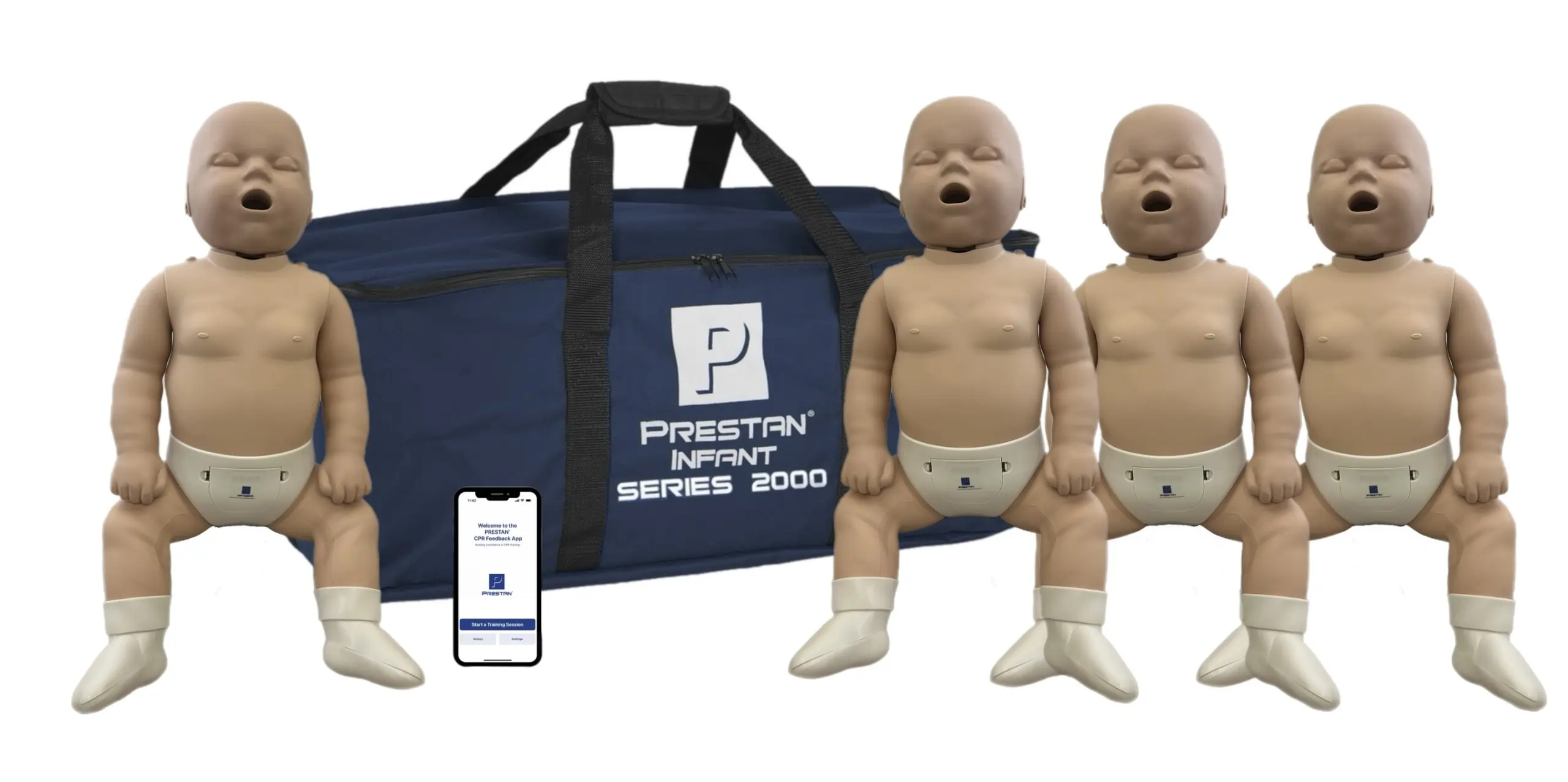
CPR training manikins Canada suppliers offer a wide range, from lightweight torsos for basic CPR to full-body models with airway and feedback tech. The right choice depends on size of classes, travel needs, and skill depth.
Consider the following when evaluating manikins:
- Compression feedback that matters. Visual or app-based feedback helps learners find the 5 to 6 cm compression depth and 100 to 120 per minute rate. Manikins with real-time LEDs or Bluetooth apps drive better performance than guesswork, and they reduce the bad habits you see with squishy, unmetered torsos.
- Airway realism. For basic workplace CPR, a head tilt and chin lift with a simple airway is sufficient. If your risk profile includes opioid overdoses or you train designated first aiders to use bag-valve masks, look for models with more realistic airway resistance and chest rise.
- Durability and hygiene. Replaceable lungs and face shields keep the program clean. In high-volume settings, choose manikins with wipe-clean surfaces that tolerate hospital-grade disinfectants. Quick-change lung bags speed resets between learners.
- Adult, child, and infant balance. Your staff should be able to manage cardiac arrest in any age group. Many sites default to adult-only training because it is cheaper, but if your business serves families or the public, include pediatric manikins in rotation.
- Portability. In multi-site companies, instructors haul gear through airports and in and out of cars. A set of three to four adult torsos that fit into one roller case pays for itself in fewer injuries and faster setup.
There is no single perfect manikin. A practical mix is a primary set with feedback for class drills, plus a couple of rugged, no-frills torsos that live in a site’s training room for monthly refreshers. That way, you protect your investment gear while giving supervisors the freedom to run short, in-house practice sessions.
AED training equipment that reflects your installed devices
If you have AEDs on site, your AED training equipment Canada purchases should match your live defibrillators as closely as possible. Staff learn muscle memory with the trainer they touch most often. It only takes one surprise when an electrode cable plugs in on the left instead of the right to waste 20 seconds during a real event.
Look for AED trainers that:
- Mimic your fielded model’s prompts, button layout, and pad shapes. If you have mixed brands across locations, keep an inexpensive universal trainer in your kit and rotate sessions so staff see both styles.
- Offer English and French prompts. Even in a majority-English site, a visiting contractor might need to step in. The bilingual toggle builds inclusive readiness.
- Include adult and pediatric training pads. Canadian public sites increasingly stock pediatric capabilities on AEDs. Train your staff to recognize the switch or key and to place pads in the appropriate positions, including the anterior-posterior layout for small chests.
- Support scenario programming. Trainers that simulate shock advised, no shock, motion artifact, and low battery teach people to listen, not just follow a memorized script.
- Survive abuse. Pads get peeled and re-stuck a hundred times per class. Choose trainers with inexpensive replacement pads and robust cables.
AED use without effective CPR rarely saves a life. Build your drill plans to connect the two. Learners should practice compressions right up until pad placement, hands off only when the device analyzes, then back on the chest with minimal delay after shock or no-shock prompts.
Beyond CPR: emergency training equipment for realistic scenarios
Emergency training equipment Canada vendors carry more than manikins and AED trainers. A credible program lets people handle the gear they would actually use. In low-risk offices, that might mean barrier masks, triangular bandages, and splints. In a plant or a distribution centre, the stakes are higher. Consider scenario items that teach bleeding control, burns management, and immobilization.
Tourniquet trainers, pressure dressing trainers, and moulage kits make the difference between theory and action. If your job sites handle chemicals or work outdoors, practice eye wash drills and hypothermia prevention. In some provinces, naloxone is recommended or required in workplaces at risk of opioid exposure. If your sites stock it, run simulated administrations using trainer atomizers, and cover scene safety thoroughly.
One caveat: separate training equipment from operational supplies. You do not want your emergency carts raided for a class, leaving the real kit short. Keep a clearly labelled training set and track its inventory so you can restock consumables in advance of courses.
What lives inside a well-built CPR and first aid training kit
Think of the training kit as a library of practice items, not a mirror image of your legal first aid box. You are aiming for repetition. For a standard class of 8 to 12 learners, a functional kit typically includes multiple adult manikins with feedback, at least one infant and one child manikin, several barrier devices or practice pocket masks with replaceable valves, an AED trainer with extra training pads, practice epinephrine trainers for sites where severe allergies are a concern, tourniquet and pressure dressing trainers, assorted triangular bandages, splints, and a few mock medication devices if relevant.
Make sure there are extra gloves in a range of sizes and a protocol for safe disposal of used practice lungs and valves. A few meters of marker tape help with scene setup. Laminated prompt cards in English and French reduce instructor talk-time and give shy learners a quick visual anchor.
Training spaces in Canada vary wildly. I have run classes in quiet boardrooms and echoing warehouses next to forklift lanes. Pack a small portable speaker so your AED trainer’s prompts can be heard, and set cones for a clear training zone if you are teaching near operations. If you need to travel in winter, choose a case with big wheels and latches that do not freeze shut.
Instructor-level packages: when you bring training in-house
Third-party training providers do a solid job, but many larger organizations choose to certify internal instructors. CPR instructor packages Canada options usually bundle manikins, an AED trainer, barrier devices, course media, and an instructor manual or portal access.
When comparing packages, look for:
- Volume economics that match your throughput. If you run monthly classes at multiple sites, two sets of manikins with compatible feedback systems save time and simplify spare parts.
- Bilingual resources and exam materials. Even in provinces where English dominates, having French-ready teaching aids signals respect and meets obligations when you host visitors or rotate staff.
- Clear maintenance pathways. You need to know where to buy replacement lungs, faces, pads, and batteries without long lead times. Domestic stock matters when you are rescheduling a class next week.
- Digital learner management. If the package ties into an LMS or includes online pre-work, verify it captures the data your safety team needs for audits. Privacy compliance in Canada is not optional, so choose platforms that let you store data in Canada or handle consent appropriately.
Internal programs work best with a lead instructor who owns quality control. That person checks gear before courses, coaches new instructors, and keeps a calendar of refreshers so skills do not decay. It is tempting to let the local CPR supplier Canada kit gather dust until the next recertification is due. That is how you end up with dead trainer batteries and expired face shields on class day.
Hygiene, maintenance, and the pace of use
A busy kit looks tired fast. The difference between well-loved and unsanitary is a cleaning routine and spare parts on hand. Wipe down manikins between learners with compatible disinfectants, allow full drying time, and replace lungs and valves per the manufacturer’s interval or sooner if contaminated. Keep a small log in the kit with dates for last deep clean, part replacements, and battery checks.
Temperature swings matter. Do not store manikins or AED trainers in unheated trailers or hot mechanical rooms. Plastics warp and adhesives on pads lose tack. In winter, give your gear an hour to come to room temperature before class. If you travel to remote sites, pack extra training pads and a simple extension cord. You will find yourself teaching next to a single, overworked outlet more often than you expect.
Accessibility, cultural context, and psychological safety
Training should fit the people you have, not a theoretical average. If your team includes workers who kneel poorly, add foam pads or raise manikins onto sturdy tables so they can deliver depth without joint pain. If staff use hearing aids or speak English as a second language, slow the cadence and use visual feedback devices to reinforce success. In communities where emergency interactions carry stress, acknowledge it. A short pre-brief that frames the drill as a safe space to try, fail, and try again produces better outcomes than a high-pressure exam tone.
In bilingual workplaces, alternate prompts and demonstrations between English and French. Use AED trainers that can switch languages mid-scenario so learners practice finding and toggling that function. Keep signage and laminated cue cards in both languages.
Designing scenarios that reflect real risks
A generic drill is better than nothing, but a tailored scenario sticks. In a food processing plant, run a choking drill next to the packaging line, with machine noise pumped through your speaker. In a retail store, practice finding and retrieving the public AED while another learner calls 9-1-1 and coordinates by phone. For northern operations where EMS response times can be 20 to 40 minutes, rehearse prolonged CPR handovers with crew rotations and environmental management to prevent rescuer fatigue.
Pay attention to choreography. Teams should learn to split roles naturally: one person leads compressions, one manages the AED, another controls the environment and calls for help. Rotate roles so everyone feels each position.
Budgeting: buy once, cry once, then sustain
Entry-level kits cost less up front but more in frustration. You feel the false economy when AED trainer pads stop sticking after a few classes or a manikin’s feedback lights fail. For most businesses, the sweet spot is mid-range: solid, serviceable gear with ready access to consumables in Canada.
Budget for replacement parts from day one. A rough rule is to set aside 10 to 20 percent of initial kit cost annually for consumables and minor repairs if you teach monthly. If you teach quarterly, you can dial that back, but do not let it drop to zero. Plan for a manikin facelift every few years as technology improves. The jump from no feedback to app-based feedback is meaningful enough to warrant an upgrade cycle.
If you operate multiple locations, centralize procurement of CPR and first aid training kits to standardize quality and drive better pricing. Ship duplicates to high-turnover sites so instructors are not moving gear across provinces to cover back-to-back sessions.
Data, documentation, and defensibility
Training logs, attendance records, and equipment maintenance notes protect your people and your organization. In a serious incident review, you will be asked who was trained, when, on what equipment, and by whom. Simple is best. Keep a binder in the training kit with printed rosters and maintenance checklists, then mirror the data in a digital tracker. For privacy, collect only what you need and store it appropriately. If you rely on third-party platforms, confirm that your data residency and retention settings meet your legal and contractual obligations.
What businesses get wrong, and how to avoid it
The most common mistake is buying gear that no one uses between certification dates. Skills fade fast. The second mistake is mismatched equipment: training on an AED brand you do not own, or practicing adult-only CPR when your public-facing site needs pediatric readiness. The third is failing to adapt to the actual floor plan. If your AED is behind a locked glass door after hours, teach the workaround or change the placement.
Another pitfall is overcomplicating the kit. Fancy airway heads and invasive adjuncts do not belong in most workplaces and can intimidate learners. Spend money where it boosts core performance: compression feedback, realistic AED trainers, and bleeding control practice.
A five-point readiness check
- Your kit reflects your installed AEDs and includes bilingual prompts where needed.
- You have enough manikins and practice supplies to run classes without long waits.
- Consumables, pads, and batteries are stocked, with a simple maintenance log.
- Scenarios match your site’s actual risks and floor plan, with role rotation.
- Short, regular refreshers are on the calendar, not only full recertifications.
A compact plan to implement or upgrade
- Map requirements by province and risk, then standardize to the strictest realistic need across sites.
- Select CPR training manikins Canada suppliers and AED training equipment Canada options that match your deployed devices and language needs, and secure a steady source of consumables.
- Choose CPR instructor packages Canada offerings if bringing training in-house, and appoint a lead for quality and maintenance.
- Build a quarterly micro-drill schedule using your Emergency training equipment Canada set, focusing on compressions, AED use, and bleeding control.
- Document training and kit upkeep, and review after each drill to target improvements.
Bringing it all together
Preparedness is not a single purchase. It is a rhythm. Setups that work share a few traits: they use training gear that looks and behaves like the real thing, they respect the Canadian regulatory patchwork without being trapped by it, and they treat practice as part of work life. When I watch a team move through a scenario with calm, clear roles, it is never because they memorized a script. It is because the equipment felt familiar in their hands and because they had put in the repetitions to trust themselves.
If you are building or refreshing your program, start with the essentials and invest in the pieces that change outcomes. Well-chosen CPR and first aid training kits, paired with the right mix of CPR training manikins, AED training equipment, and practical emergency training gear, turn bystanders into responders. When the moment comes, that is the only metric that matters.